Search This Blog

Showing posts with label Nilsson. Show all posts

Monday, December 02, 2013

To Think of Tea!

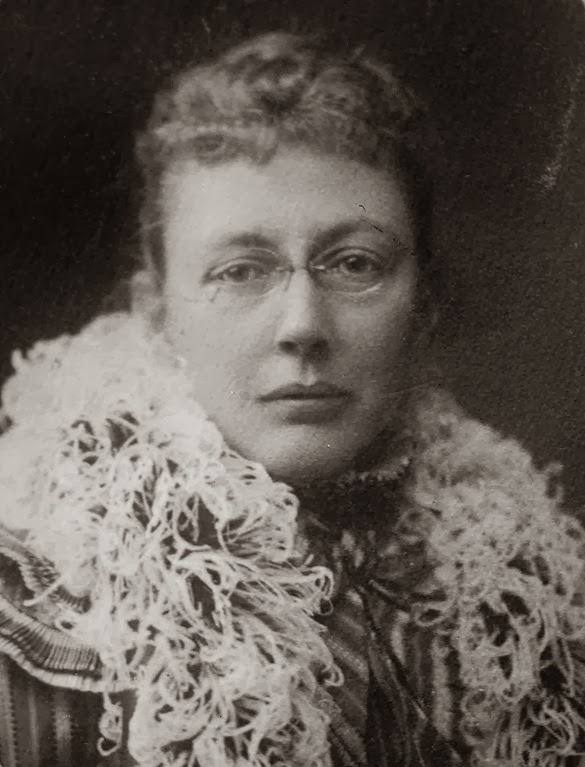
Guest Blogger Dept.: Agnes Repplier was a renowned – and now unjustly neglected – essayist whose keen mind and colorful, precise prose style ensured a successful career. As a child, she quickly memorized and recited the poems her mother read to her, but resisted her mother’s efforts to teach her to read, which she did on her own at the age of ten. At 12 she was enrolled at  Eden Hall, the Convent of the Sacred Heart, just north of her native Philadelphia, but was asked not to return after two years. She was kicked out of Agnes Irwin’s West Penn Square Seminary for Young Ladies after three times because of her rebelliousness. By the time she was 20, her writing began bringing in enough money to help support her family. She died in 1950 at the age of 95. She was a lifelong smoker. The following excerpt is from her book To Think of Tea!, the finest volume ever written on the subject.


Agnes Repplier
IT IS THE MODERATE EXHILARATION induced by tea which makes it such a boon. We may, as Dr. Johnson asserts, be happy when we are drunk; but we are tolerably sure to be unhappy afterwards. The sense of contentment which follows the second cup of tea is not so irresponsible as to defy experience. It is a contentment compatible with ordinary circumstances. It does not lift us so high that the fall hurts, nor shelter us so securely that the return to noise and glare is shocking. For most of us life holds no good years, and few good days; but multitudinous good minutes if we recognize their presence. ‘Après tout c’est un monde passable.’

We cannot think that tea gives to Americans what it gives to the English. It is not our affinity any more than a cocktail is theirs. The American genius ran to mixed drinks, and achieved marvellous results. The rapture of Dickens over his first sherry cobbler blotted temporarily from his mind his distaste for all things else American. Today, England, France, Italy and Spain offer to tourists an assortment of mixed drinks, their names startlingly familiar, their qualities unrecognizable. But never since the Revolution have we returned heartily to tea. When proffered in the afternoon, it is nervously rejected as prejudicial to sleep, or drunk so weak as to be truly ‘slop-kettle.’

Monday, November 18, 2013

We Aren’t Normal

ABNORMAL OCCURRENCES is being billed as Thomas Berger’s first short-story collection in over thirty years, but that takes into account the small-press run of “Granted Wishes,” which presented three stories from a then-recent issue of Harper’s. All three are included in the new book, along with three new ones in the “Granted Wishes” series. “There are  still a few pieces of short fiction that have gone uncollected,” Berger notes, “but they didn't grab me when I reread them, and I decided to write the new stuff.”

What’s more significant is that this is Berger’s first publication since the 2004 novel Adventures of the Artificial Woman. What’s most significant is that it showcases Berger’s unique voice in a format he rarely practices.

He’s best known as a novelist, although that notoriety is the product of the popularity of the film version of his Little Big Man, the most successful of the quartet of movies his books have inspired. But the fans of his novels, judging by earlier reviews and online comments, are a dedicated bunch, with Jonathan Lethem among the more vocal of his supporters.

This is because the prose in his 23 novels displays a level of craftsmanship that is as masterful as it’s rare, celebrating the power of deft and unexpected combinations of words to tell multi-layered stories with compelling effect. What’s more impressive is that, recognizable as Berger’s style becomes, it’s unique from book to book, each of which is crafted with a particular voice. Thus the dark intricacies of Neighbors has a more contemporary sound than the antique midwest celebrated in Sneaky People; the dystopian future of Regiment of Women has a sense of temporal distance mirrored by the language Berger crafted for long-ago Britain in Arthur Rex.