Search This Blog

Monday, January 31, 2022

Like a Big Pizza Pie

From the Food Vault Dept.: It’s long gone, I’m afraid. Owner Victoria Gelaj sold Pasquale's and moved south, the better to deal with some family issues, as I understand it. Which was a shame: this had become a favorite Albany hangout since my first visit to the place in 2009, described below.


YOU HAVE YOUR HALLOWE’EN INDULGENCE, I’ll have mine. As my wife and daughter plied the streets of Albany with a passel of costumed friends, a friend and I went in search of good pizza. And did we ever luck out.

The website AllOverAlbany.com voted Pasquale’s pies the best in its 2008 Tournament of Pizza, and the restaurant is again one of the top contenders in this year’s contest – the results of which will be announced as this issue of Metroland hits the streets.

While I can’t weigh in on Pasquale’s from a tournament-style perspective, I can anecdotally laud it for a superior product in a high-competition field. Of course, the general standards aren’t all the highest – there’s plenty of mediocre pizza out there, and even mediocre pizza can be satisfying if it’s late and you’re hungry.

Friday, January 28, 2022

Dogging the Classics

 From the Classical Vault Dept.: One memorable weekend twelve years ago, the Albany Symphony gave a pair of concerts at a spiffy new hall in Troy – or halls, I should say, because the Symphony itself was in the Concert Hall, the smaller Dogs of Desire unit in the Theater. I was impressed enough to beg for more than the usual space for this longish review.


IT’S POSSIBLE THAT A HALF-CENTURY AGO you could have seen, say, Copland, Bernstein and Schuman at a concert hall during a performance of their music. But back then it was almost unheard of for a major orchestra to put three living American composers on the same bill, never mind in the same room.

James Primosch
Not that we’ve made a whole lot of progress since then, which is why the Albany Symphony Orchestra’s dogged pursuit of new and recent works remains admirable. Friday night’s Dogs of Desire program at EMPAC’s Theater gave us composers Patrick Burke, Ted Hearne, David Mallamud and Todd Reynolds, each with a premiere. Saturday night’s concert at EMPAC’s Concert Hall featured the presence of three of the four represented composers, with a program that included two premieres. That’s an unprecedented amount of new stuff.

ASO conductor David Alan Miller encouraged composer James Primosch to consider a Hudson River theme for his Meet-the-Composer commission. Primosch’s relationship with the orchestra goes back to 1992, when they premiered his “Some Glad Mystery;” for this concert, he drew inspiration from the Hudson River School of painters (Frederic Church. Thomas Cole, et. al.) and wrote a piece titled “Luminism,” a sort of synesthesia – reversing the best-know type – in which color and light inspire music.

Monday, January 24, 2022

Fiddler on the Hoof

From the Classical Vault Dept.: The bane and glory of a performing artist is the incessant touring the job demands. But this has allowed me to see Itzhak Perlman in performance near my home turf several times during his years of travel. Here’s an account of a recital he gave in Schenectady in 2010.


IT’S HARD TO SAY that a performer is at the peak of his career until you see him start to falter, at which time the judgment becomes hindsight. So let’s just say that violinist Itzhak Perlman continues to perform as inspiringly as ever.

Itzhak Perlman and Rohan De Silva
Photo by David Bazemore
Perlman and pianist Rohan De Silva last played Proctor’s in 2004, a concert I’ve reminisced about often enough to seem much more recent. And the program was similar insofar as it featured slightly lesser-known works in the violin-piano repertory.

Beginning with a sonata by Mozart (in A Major, K. 526), which is variously numbered as 14, 15, 18 or 35 depending on whether you count the youthful sonatas and throw out the fragments and/or possibly spurious works. Over the course of writing those works (between 1763 and 1788), Mozart improved the role of the violin from accompanying instrument to full-fledged partner, so by the time he got to this work, a nice balance had been achieved.

Friday, January 21, 2022

Eliza's Mother

Guest Blogger Dept.: Let’s welcome back Barry Pain with the third chapter of his wonderfully droll book Eliza. Chapter one is here, two is here. I don’t wish to put you off by overstating the case, but leave it to you to decide how funny they are. You will, of course, be inclined to swoon with pleasure if you wish to remain my friend.


I GENERALLY SEND ELIZA to spend a day with her mother early in December, and try to cheer her up a little. I daresay the old lady is very lonely, and appreciates the kindly thought. The return ticket is four-and-two, and Eliza generally buys a few flowers to take with her. That does not leave much change out of five shillings when the day is over, but I don’t grudge the money. Eliza’s mother generally tries to find out, without precisely asking, what we should like for a Christmas present. Eliza does not actually tell her, or even hint it – she would not care to do anything of that sort. But she manages, in a tactful sort of way, to let her know.

"It was true I ran into the horse."
Drawing by Wallace Goldsmith

For instance, the year before last Eliza’s mother happened to say, “I wonder if you know what I am going to give you this Christmas.”

Eliza said, “I can see in your eye, mother, and you sha’n’t do it. It’s much too expensive. If other people can do without silver salt-cellars, I suppose we can.”

Well, we got them; so that was all right. But last year it was more difficult.
 
You see, early in last December I went over my accounts, and I could see that I was short. For one thing, Eliza had had the measles. Then I had bought a bicycle, and though I sold it again, it did not, in that broken state, bring in enough to pay the compensation to the cabman. I was much annoyed about that. It was true I ran into the horse, but it was not my fault that it bolted and went into the lamp-post. As I said, rather sharply, to the man when I paid him, if his horse had been steady the thing would never have happened. He did not know what to answer, and made some silly remark about my not being fit to ride a mangle. Both then and at the time of the accident his language was disrespectful and profane.

Monday, January 17, 2022

Behind the Lines

EDWARD SOREL’S COVER ART for his book Profusely Illustrated pictures him at a drawing board, pen poised in his right hand. In all other respects, as we learn from the narrative’s autobiographical details, he was an unapologetic lefty, committed to progressive causes, often functioning as a contemporary Hogarth or Daumier when he had the right (left) forum at hand.

At 92, Sorel is taking stock, not only of his life and work but also the society amidst which he’s been working. He notes at the outset that he sought to “save a few of my drawings from the oblivion that awaits most protest art and ... magazine illustrations,” and so we have 177 such pieces enshrined here – all the more admirably considering that, as Sorel explains later, the book was put together during a time when coronavirus shutdowns limited his access to library-stored originals, leaving his photographer-son Leo the task of photographing many of them from tearsheets. You’d never know it. The reproductions look terrific.

He also promises to “offer up an explanation for how the United States ended up with a racist thug in the White House. My belief is that it was made possible by the criminal acts committed by the twelve presidents who preceded Trump.” This promise is depressingly fulfilled as we regularly veer from his own well-told tale to incisive White House visits, beginning with Truman’s red-baiting tactics.

Friday, January 14, 2022

Orchestral Harris-ment

From the Classical Vault Dept.: It numbs me sometimes to think that a review such as the one below was crafted 34 years ago. Although my doctor insists it’s merely neuropathy. In any event, here’s a review spotlighting a Roy Harris work I’m eager to hear again.


THE MOST REPRESENTATIVE FLAVOR of 20th-century American music is in the music of Roy Harris. It may not be a majority representation – there are too many disparate paths to follow. Nor is it a popular representation – anything that could possibly be labelled classical is damned where popularity is concerned. But a merry amalgam of the many voices of this country sparkles through Harris’s work, as his 1940 (but only recently premiered) violin concerto reveals.

Roy Harris
Soloist Gregory Fulkerson did a magnificent job performing it with the Albany Symphony Orchestra on Friday night at theTroy Music Hall, proving Harris to be a quiet champion in the virtuoso tradition. There was no question that the violin was the star, but a benevolent one, happy to share the spotlight with the orchestra. Led by music director Geoffrey Simon, the ASO was a strong and effective partner.

Tinkering with the concerto tradition a little, Harris opens the single-movement work with a languorous melody on the violin, echoed by a plaintive oboe. The several changes of mood are anticipated by the soloist, urging the orchestra into ever-faster dances, until the piece sweeps to a jaunty finale in which the soloist gets to fiddle his heart out, replete with an impressive parade of technical devices that Fulkerson negotiated with ease.

Harris absorbed the folk-song traditions of this country, and, although he could tend toward the mawkish, as in his “Folkaong Symphony,” he captured, when at his his best, the sense of protest and adventure characteristic of that tradition.

Monday, January 10, 2022

Parchment Treats

NORWEGIANS DON’T WAIT for a holiday to put treats on the table. This I know, having grown up with a Norwegian grandmother. So did Isabel Burlingham, although her mormor stayed in Norway. During her many visits, Burlingham learned recipes that she now employs in the delectable offerings she bakes and sells as Parchment, a Troy-based enterprise that offers its comestibles at the ongoing Troy, Saratoga Springs, and Schenectady farmers’ markets, as well as on the shelves of the Honest Weight Food Co-op. Come May, her products will be back in many seasonal markets as well.

Isabel Burlingham in Troy
Burlingham left a career in chemistry to do this, a career that resonates with the science of baking. What drew her to chemistry in the first place? “A desire to understand how things work. I watched Bill Nye the Science Guy when I was really little, and that inspired my love of the magic behind life and the planet. So chemistry was a natural progression for me – especially versus biology or physics. It wasn’t the science or how bodies work. It was, Why is a stone blue? Is it because there’s a mineral in it that is reflecting a blue light? Or is it like a green leaf, absorbing everything but the green color? The chemistry perspective came more naturally to me.”

She worked for over a decade in that career, first in a corporate setting, then with a Saratoga County-based startup company. “I didn’t start my career as a baker until Covid, when the startup laid everyone off so that we could collect unemployment. I’d been unhappy with corporate life, which is why I moved into the startup field. But even then, I was not satisfied.”

Friday, January 07, 2022

Musically United

From the Classical Vault Dept.: Stripling that I was at the time, I remember that there was some excitement in the music press when Ursula Oppens’s recording of “The People United.” came out in 1979, three years after the work premiered at the Kennedy Center in 1976. I bought that record and fell in love with the piece, written by Frederic Rzewski (who died last summer) on a commission from Oppens and as a political gesture as well, something that was always important to him. The piece stands alongside Bach’s Goldbergs and Beethoven’s Diabellis as one of the towering works in the keyboard literature. You can also read my account of seeing Rzewski perform the work in Troy, NY, here.


WRITTEN IN 1975 for a commission from pianist Ursula Oppens, Frederic Rzewski’s hour-long “The People United Will Never Be Defeated” is one of the most fascinating, monumental works of the 20th century. It explores the sound of the piano with sometimes bizarre results, indulges in oddball time signatures and calls upon the soloist to slam the lid and whistle along.

Yet it’s a defiantly tonal work, paying as much tribute to Bach as it does to Rzewski’s post-Cowell contemporaries. The short, tuneful theme, which shares a chord structure (“changes,” in jazz lingo) with a well-known Paganini variation subject, is followed by six sets of six variations apiece, each set exploring a different concept (rhythm, harmony and more).

But it’s more intricately constructed still, with the sixth variation of each set serving as a summary of the preceding five, and the component variations of the sixth set referring back to each ordinal correspondent.

This puts the work in a structural league with the ’70s output of such writers as John Barth and Gilbert Sorrentino and the seeming non-sequitur style of Donald Barthelme – and, like the work of those authors, Rzewski’s piece is dramatically effective even without a knowledge of its innards.

Monday, January 03, 2022

Honest to Goodness

From the Food Vault Dept.: Albany’s expansive food co-op has been in business for 45 years. Since the time I wrote the piece below, it moved to larger quarters (with easier parking), went through staff and management upheavals, successfully waged some union-busting, and has settled into a corporate-like entity still beloved by many. The pricing and selections reported below have, not surprisingly, changed, and Gustav has long since left the place.


NO MATTER WHAT ELSE I take away from this place to eat, the picture I always take away is that of Gustav Ericson, factotum of the cheese department, beguiling me – and everyone else who happens to standing nearby – with a taste of something I’ve never before sampled, something pleasingly aromatic and exciting to the palate.

Gustav Ericson, recommending
“Now try it with some of this chutney,” he says, and suddenly I’m in a spicy, more complicated flavor arena, and he knows I’m hooked and cheese and chutney both join my shopping basket.

Thus it was on a recent visit. I cruised the produce aisles, admired the bulk staples, looked longingly upon the hair and skin care products, then made my way past the deli case into the next room. “Have you had a sample yet?” asked Gustav, and who am I to say no?

Ericson has been a protean presence in the region, a pastry chef who spent time in a variety of shops and kitchens before settling in at Honest Weight. “I joined the co-op well before I started working here,” he explains. “I came in as an assistant manager, and seven years ago I became manager of the cheese department. But I have some customers who’ve been following me for about 15 years, buying their bucheron from me every week. I love the co-op, and I love the way of doing business here.”

Friday, December 31, 2021

I’ve Heard That Song Before ...

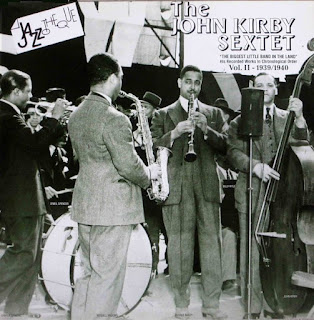
WHAT DO BEETHOVEN, CHOPIN, Tchaikovsky, Schubert, Haydn, Dvořák, and Grieg have in common? You’ll find their music in vintage jazz recordings by the John Kirby Sextet, an infectiously bouncy little group that also swung its own versions of melodies by such less-known classical composers as Sinding, Toselli, Donizetti, Delibes, and Massenet. These were terrific versions, too. Listen to Evan L. Young’s arrangement of Schubert’s “Serenade” (“Ständchen,” D 957 #4), and marvel at how the song’s heartbreaking quality is maintained against the band’s swinging pulse.

Kirby believed that his sextet was the ideal size to give such pieces a “tasteful treatment,” as he put it, telling downbeat in 1939, “I believe that symphonic pieces can be handled by jazz groups in such a way that serious music lovers won’t throw their hands up in despair.”

But jazz ensembles large and small have been unable to resist the lure of the longhair, and we can enjoy everything from Duke Ellington and His Orchestra playing “The Nutcracker” to Eddie Lang’s solo guitar performance of Rachmaninoff’s Prelude in C-Sharp Minor.

That’s because music professionals don’t see rigid lines between different types of music. Strict boundaries have, however, been thrown up by others – especially those who market music to particular demographics, and thus it is that we’re inculcated with the canard that classical music is an elitist pursuit, and that those who pursue it merit scorn.

Tuesday, December 28, 2021

Silent Night

I'd like to share another of my video collaborations with Ann-Marie Barker Schwartz, this time realizing a project she suggested to honor her late mother. With Maria Riccio Bryce's arrangement of "Silent Night" as the heart of the piece, Florin Vlad and Natalia O'Connor Vlad created a lovely dance sequence, and it was captured by the skilled videographers at Chromoscope Pictures.

Friday, December 24, 2021

Mark Twain’s Christmas Elephant

Guest Blogger Dept.: Mark Twain’s recently published autobiography runs three volumes, or two and a half if you discount the padding at the end of the third book; but it’s in that book that we read the account of the gift of an elephant that he was supposed to receive for Christmas in 1908. He hired Isabel Lyon as his secretary in 1902 as his wife grew too infirm to handle his correspondence. Ralph Ashcroft was a business associate whom Lyon married in 1909.


TEN DAYS AGO Robert Collier wrote me that he had bought a baby elephant for my Christmas, and would send it as soon as he could secure a car for it and get the temporary loan of a trainer from Barnum and Bailey’s winter-quarters menagerie at Bridgeport. The cunning rascal knew the letter would never get to my hands, but would stop in Miss Lyon’s on the way and be suppressed. The letter would not have disturbed me, for I know Robert, and would have suspected a joke behind it; but it filled Miss Lyon with consternation – she taking it in earnest, just as he had expected she would. She and Ashcroft discussed the impending disaster together, and agreed that it must be kept from me at all costs. That is to say, they resolved to do the suffering and endure the insomnia and save me. They had no doubts about the elephant. They knew quite well that if Robert was inspired to do a kindness for a friend, he would not consider expense, but would buy elephants or any other costly rarity that might seem to him to meet the requirements.

Miss Lyon called up New York on the telephone and got into conversation with Robert. She timidly suggested that we had no way of taking care of an elephant here, it being used to a warm climate and –

“Oh, that’s all right, put him in the garage,” interrupted Robert cheerfully.

Monday, December 20, 2021

The Touches of Sweet Harmony

ONCE I DISCOVERED classical music, I was ineluctably set on a path that would keep me free of the ties of mainstream anything, particularly its so-called culture. Don’t get me wrong: I’m not a total snob. But at least three-quarters of me is suffused with a snobdom that I do try to hide when I’m out in public.

In any event, as a cash-strapped teen, my main source of music became the radio, and in the New York metropolitan area, there were three stations broadcasting fairly full schedules of the stuff I wanted to hear. WQXR AM and FM, the “radio stations of the New York Times,” as it was styled back then; WNCN-FM, which lived in its own rarefied universe; and WNYC, which was a Public Broadcasting affiliate, and thus required to add news and public affairs programs to its roster. (WRVR, WKCR, and WFUV sometimes aired classical works, as did Bridgeport’s WJZZ, so don’t complain that I’ve overlooked them.)

And there was a booming yet dulcet voice that issued from the speaker late at night over WQXR, and then on WNCN, and then on WBAI, depending on how fed up any of those stations had grown with Bill Watson. And vice-versa. He was peripatetic. He was opinionated. He was devoted to Walter Gieseking and Jussi Bjoerling, among others, and was inclined to favor their recordings, often in marathon sessions.

Friday, December 17, 2021

Caution (A Legend)

Guest Blogger Dept.: This blog is getting verse – specifically, another poem by P.G. Wodehouse. The creator of Jeeves and Lord Emsworth was also a renowned lyrist in his day, contributing the words to Jerome Kern’s tunes in a series of acclaimed pre-Gershwin musicals. But this predates even that, a tender ditty that creates its own music.


[How many a doctor or architect must own that his professional life consisted of two periods – one in which he was too young to be trusted, the other in which he was too old to be efficient. – Times’s leading article]

O, read my melancholy rhyme,
Peruse my mournful ditty,
Two men there dwelt upon a time
Within a certain city.
Both were distinctly men of parts,
Well versed in their respective arts.

To fell diseases of the kind
That everyone who can shuns,
One of this pair had turned his mind,
The other’s forte was mansions.
They were, as you’d no doubt expect,
A doctor and an architect.

The latter, when but twenty-nine,
Planned a Titanic building,
A house of wonderful design,
All marble, stone, and gilding.
Said he: “My fortune’s made, I wis,
Men can’t resist a thing like this.”

Monday, December 13, 2021

Instruments of Control

From the Soapbox Dept.: I suppose it was those first few years of concert-reviewing that inspired the piece below, as I was confronted with the appalling sameness of one classical-music concert after another. Now, twenty-four years later, most of my working days are spent with music in the background. But at least it’s music I chose to semi-listen to.


MUSIC HAS THE CAPACITY of being the least instrusive of the arts. That gives it the potential of being one of the most manipulative. Thanks to decades of proper conditioning – conditioning we’ve undergone since birth – we are no more aware of such manipulation than we are of our breathing. (Until a more obtrusive purpose is required and the political thrust of a hunk of music is made obvious. You know the sound of a protest song: it sounds stirring and is excitingly fun to sing.)

The musical identity of this country has its fussy heart in a generation-to-generation revision of values signified by the evolution of a tangled vine of musical stylings. It began at the beginning of the century, when jazz unseated the dry huffings of a boring crew of classical composers (slaves to a European tradition), and it ended with the end of the folk-song boom of 20 years ago.

Significantly, we’re once again listening to what the Europeans are saying – if we’re listening at all.

Continuity of music is found in celebration; change is fueled by rebellion. More drastic musical change was effected in the United States during this century than anywhere else in the world over any given time period, yet it’s a history so fraught with compartmentalization that a view of any appreciable scope must be sewn together from scattered ingredients.

Friday, December 10, 2021

To a Tee

From the Tech Vault Dept.: The evanescence of technology is such that nothing in the article below has any currency. The company that made those printers is gone, and you’re now able to design a T-shirt and upload the design to a company that will provide the finished product for far less than you’d invest for the products below. We’re going back twenty-five years, after all. (Photos by John Popplewell.)


LIFE’S SIGNIFICANT ACHIEVEMENTS are often marked with trophies and plaques and, more whimsically, clothing. Whether it’s your baseball team’s recent victory, your church choir’s tour, or simply surviving another year at work, there are celebratory messages to be worn.

The T-shirt-inscription business has flourished accordingly. Needless to say, there are folks who do very good work in this field, but you still have to relinquish control when you hire somebody else to do it for you. Thanks to your skill at the computer, though, that’s no longer the case. Anything you can render onscreen can be turned into a professional-looking tee with the help of Fargo Electronics’ PrimeraPro Color Printer and its special T-Shirt Transfer Paper. Design it, print it, iron it on. It’s that simple.

Once you make the investment in the printer, your per-shirt cost is much less than a commercial outfit charges, especially for a limited run. And the possibilities open up from there. Printed garments (let’s not forget sweatshirts) have great fund-raising potential. It’s nice and sentimental for your group to promote itself by sporting appropriately legible clothing; it’s often nicer and more profitable for your group to sell those shirts to its fans.

Ultimately, you’ll be able to make a business out of it. With a good graphics program, a creative eye, and a collection of headline typefaces, you already have the design tools. Add an entrepreneurial spirit and the PrimeraPro printer, and you’re ready to go. It’s a trade you should get into – if you’ll pardon my saying so – while the iron is hot.

Monday, December 06, 2021

Something to Believe In

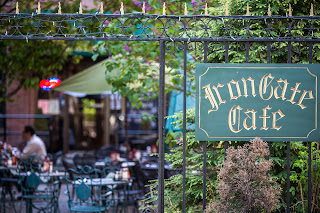
From the Food Vault Dept.: After the demise of Albany’s Metroland Magazine, there was a short-lived pseudo-alt-weekly that was published for a while under the hopeful name of The Alt. It had none of the alternative-news sensibility one expects from such a paper, and it was further hampered by its editor’s very limited cultural intelligence. I wrote some pieces for the mag during its brief existence; here’s one. As of this writing, the Iron Gate continues to thrive.


IT WAS AN UNLIKELY BIRTH for a restaurant. “I’ve always related to the Ramones,” Kevin Dively explains. “I bought my sister one of their albums for her birthday when she was, like, ten – because I wanted it – and it changed my life. I mean, at the time, what was the music out there? And here are the Ramones! So me and my brother and a neighbor decided that we could do this, and we started a band.”

Which meant he didn’t fit well into the nine-to-five employment paradigm. “When you’re doing the band thing, the one job you can always get is a restaurant job. So I bounced around a lot of restaurants.”

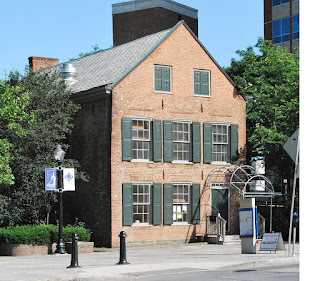
Meanwhile, his parents had bought and restored a four-story Victorian mansion in downtown Albany, the onetime School No. 10 that was owned by industrialist James Holroyd in the 1890s. The single-family structure came with a small office space attached, “but the people in there moved out because there wasn’t any parking. My dad didn’t know what he was going to do with it, so I said ‘Let’s put a little sandwich shop in there.’”

Friday, December 03, 2021

Mosaic on the Move

MOSAIC RECORDS WAS FOUNDED, nearly forty years ago, with the mission of reissuing great jazz recordings in a way that best showcases a particular artist or label. The reissues are prepared from the best source material that can be found, with skillful audio restoration to minimize noise while maintaining the music’s integrity. This is the Criterion Collection of recorded jazz. When one of the limited-edition box sets sells out, you’ll find it on eBay and elsewhere for far more than the original retail price.

Michael Cuscuna
As co-founder Michael Cuscuna wrote in 2017, “Charlie Lourie and I started Mosaic Records in 1982 and our first releases were in 1983. The company was almost an afterthought. The idea of definitive boxed sets of complete recordings by jazz masters at a crucial time in their careers was a small part of a proposal that we made to Capitol Records in 1982 to relaunch the Blue Note label. Even before Capitol turned us down, it occurred to me one night that the release of these boxed sets could be a business unto itself if we made them deluxe, hand-numbered limited editions sold directly to the public.” And so it has been, with each box set limited to a few thousand numbered copies, each boasting a booklet renowned for its scholarly essays and exhaustive discography.

Now, 271 box sets later, Mosaic is closing its offices. If you’re on the list, you got the e-mail. (If you’re not, you can sign up at mosaicrecords.com.) It sounded a little alarming, especially considering the financial perils the company has shared in the past. But Cuscuna assures us that it’s a positive step. The email also invited the record label’s fans to an open house. Not the first one that Mosaic has held, but this would be the last.

Monday, November 29, 2021

No Coincidence

From the Food Vault Dept.: It took over fifteen years to discover why there was a job opening that enabled me to get hired for my first job cooking in a professional kitchen. The piece below describes the reason. The Quackenbush house has since gone through several incarnations, including a couple of French-cuisine stints on into its current impression of an English pub.


HE MIGHT AS WELL HAVE BEEN reciting poetry. Everything Maurilio said as he described his menu and his restaurant agreed perfectly with my own ideas of excellent food. To properly appreciate the broad range of restaurants in existence requires a flexible standard, but what Maurilio Gregori has done to the Quackenbush House is exactly what I’d do were I to open my own place.

The Quackenbush House, in a
more recent view.

Although Marina, my literary companion, and I came in unannounced early last week, Maurilio lavished the kind of attention on us you’d expect would be reserved for a wealthy regular. When he got down to cases, describing the evening’s specials, I was astonished. A native of northern Italy, he shuns the pasta-and-sauce emphasis of much Italian-American cooking. “You could call this continental,” he says, “but I’d hate to have it labeled.”

“It’s exactly how I was taught to cook,” I told him, describing the Italian chef who gave me my start in the kitchen and insisted on the same care and consistency. And then this shared attitude turned out to be no coincidence at all: Maurilio got his start at the same restaurant, the Elms Inn in Ridgefield, Conn., several years before I worked there. The chef who proved so influential was a brilliant, temperamental man named Mario Scala, who taught us that a sincere passion for life was the only proper context for the love of food that lures you into the business. That celebration is a hallmark of Maurilio’s restaurant.

Thursday, November 25, 2021

Old Folks at Home

Our second pandemic-era Thanksgiving! How exciting! I didn’t think “frustration” was a sound culinary theme; instead, I decided to smoke a turkey but put alongside it some grilled picanha. On Thursday, the weather was vile enough that I forsook the smoker and roasted the bird instead, adding some smoked paprika to its seasonings to give it a hint of that outdoor flavor. The menu is pictured; our slide-show history of Thanksgiving menus is here.