Search This Blog
Monday, April 30, 2018
The Faux McCoys
Twenty-five years ago, I drew the above to celebrate Susan's and my recent acquisition of a Montgomery County, NY, farm. Our friend Lily Bartels appropriately dubbed it "The Faux McCoys." The silo was sold a few years thereafter; the cupola came off the barn during a re-roofing and, as it's not original to a Dutch design, remained off. Asta, our Australian Blue-Heeler puppy, aged into oblivion. The portrait remains a nostalgic reminder of what's now a generation ago.
Friday, April 27, 2018
Highland Fling
From the Food Vault: I wrote this review in 2011, but when you’re dealing with a place that has been successfully operating, with little change, since 1936, you’re liable to lose your chronological bearings, as I note below. Prices have increased a bit since this visit, but you can get updated info at the restaurant’s website.
YOU MAY THINK YOU WALKED INTO THE WRONG PLACE, as I thought. Not that the Highland doesn’t look sufficiently restaurantlike – but it looks like you’ve entered an Italian joint from your parents’ (or, you stripling, grandparents’) childhood. Which already probably projects the Highland into its own future. It opened in 1936.
Twenty years is an eternity in this business. Three-quarters of a century is freakish. But another anachronistic phenomenon kicks into play here once you’re seated and studying the menu. You feel like you’ve been here before – been here often enough that your server’s easy familiarity was earned by those repeated visits. Why else would anyone be so friendly?
Read the online reviews and you’ll learn it’s the nature of the place. Nothing in the experience of my recent visit proved otherwise. It was a Sunday evening, going on 7. Downtown Pittsfield was sepulchral, with open-for-business lights peeking only from an occasional convenience store. My GPS, grumpy for getting the wormy downtown streets wrong, tried to send me to Lenox, but I wrestled it to the destination.
YOU MAY THINK YOU WALKED INTO THE WRONG PLACE, as I thought. Not that the Highland doesn’t look sufficiently restaurantlike – but it looks like you’ve entered an Italian joint from your parents’ (or, you stripling, grandparents’) childhood. Which already probably projects the Highland into its own future. It opened in 1936.
![]() |
| Photo by B. A. Nilsson |
Read the online reviews and you’ll learn it’s the nature of the place. Nothing in the experience of my recent visit proved otherwise. It was a Sunday evening, going on 7. Downtown Pittsfield was sepulchral, with open-for-business lights peeking only from an occasional convenience store. My GPS, grumpy for getting the wormy downtown streets wrong, tried to send me to Lenox, but I wrestled it to the destination.
Monday, April 23, 2018
According to Alice
From the Theater Vault Dept.: As the father of a theater major, I’m no longer easily persuaded to avail myself of child-centered entertainment. But this production of “Alice in Wonderland,” I was told by a very reliable friend, was exceptional. It was.
THANKS TO ITS ROBUST WORDPLAY and surrealist approach to the fears of childhood, this is a story that resists the transition from book to other media. Which only seems to encourage those adaptations. “Alice in Wonderland” is one of nearly a dozen children’s shows devised by the Prince Street Players beginning in the late 1960s, with book and lyrics by Jim Eiler, who co-wrote the music with Jeanne Bargy.
It’s the current offering of the Theatre Institute at Sage, and gets a superb production from an all-student cast who take over the stage with the aplomb of Broadway veterans. You won’t mistake it for a performance by polished pros, but this is as good as community theater gets, which is very good indeed.
The adaptation captures the best-remembered moments from “Alice in Wonderland” and even incorporates a bit of “Through the Looking Glass” in a music hall sequence that’s very entertaining even as it stops the momentum of the rest of the story.
THANKS TO ITS ROBUST WORDPLAY and surrealist approach to the fears of childhood, this is a story that resists the transition from book to other media. Which only seems to encourage those adaptations. “Alice in Wonderland” is one of nearly a dozen children’s shows devised by the Prince Street Players beginning in the late 1960s, with book and lyrics by Jim Eiler, who co-wrote the music with Jeanne Bargy.
![]() |
| Charlie Barnett IV and Taylor Fuld |
The adaptation captures the best-remembered moments from “Alice in Wonderland” and even incorporates a bit of “Through the Looking Glass” in a music hall sequence that’s very entertaining even as it stops the momentum of the rest of the story.
Friday, April 20, 2018
Italian Without a Master
Guest Blogger Dept.: We call once more upon the redoubtable Mark Twain to enlighten us, this time with reflections upon his vacation residence in Florence. It first appeared in Harper’s Weekly in 1904, with the six illustrations by Albert Levering reproduced below, all of which were collected in The $30,000 Bequest and Other Stories, which Harper and Brothers issued in 1906.
IT IS ALMOST A FORTNIGHT now that I am domiciled in a medieval villa in the country, a mile or two from Florence. I cannot speak the language; I am too old now to learn how, also too busy when I am busy, and too indolent when I am not; wherefore some will imagine that I am having a dull time of it. But it is not so. The “help” are all natives; they talk Italian to me, I answer in English; I do not understand them, they do not understand me, consequently no harm is done, and everybody is satisfied.
In order to be just and fair, I throw in an Italian word when I have one, and this has a good influence. I get the word out of the morning paper. I have to use it while it is fresh, for I find that Italian words do not keep in this climate. They fade toward night, and next morning they are gone. But it is no matter; I get a new one out of the paper before breakfast, and thrill the domestics with it while it lasts. I have no dictionary, and I do not want one; I can select words by the sound, or by orthographic aspect. Many of them have French or German or English look, and these are the ones I enslave for the day's service. That is, as a rule. Not always. If I find a learnable phrase that has an imposing look and warbles musically along I do not care to know the meaning of it; I pay it out to the first applicant, knowing that if I pronounce it carefully he will understand it, and that's enough.
IT IS ALMOST A FORTNIGHT now that I am domiciled in a medieval villa in the country, a mile or two from Florence. I cannot speak the language; I am too old now to learn how, also too busy when I am busy, and too indolent when I am not; wherefore some will imagine that I am having a dull time of it. But it is not so. The “help” are all natives; they talk Italian to me, I answer in English; I do not understand them, they do not understand me, consequently no harm is done, and everybody is satisfied.In order to be just and fair, I throw in an Italian word when I have one, and this has a good influence. I get the word out of the morning paper. I have to use it while it is fresh, for I find that Italian words do not keep in this climate. They fade toward night, and next morning they are gone. But it is no matter; I get a new one out of the paper before breakfast, and thrill the domestics with it while it lasts. I have no dictionary, and I do not want one; I can select words by the sound, or by orthographic aspect. Many of them have French or German or English look, and these are the ones I enslave for the day's service. That is, as a rule. Not always. If I find a learnable phrase that has an imposing look and warbles musically along I do not care to know the meaning of it; I pay it out to the first applicant, knowing that if I pronounce it carefully he will understand it, and that's enough.
Monday, April 16, 2018
The Innocent Ear
MY DAUGHTER MADE HER RADIO DEBUT IN MANCHESTER not long ago, and how this came about is worth the telling. We begin in 1972.
I was a high-school junior, freshly enamored of theater having made my stage debut with roles in Joseph Kesselring’s “Arsenic and Old Lace.” This was in suburban Connecticut, so it was only natural that the Theater Arts students should be invited to spend a show-going week in London in February. A mere $300 bought airfare, hotel room, and tickets.
The first show we saw was a musical version of “The Canterbury Tales.” I didn’t like it very much. Next was “Never the Twain,” a quirky mash-up of works by Kipling and Brecht, which was far more appealing, but by then I realized that some of my favorite actors were performing on the West End, and I forsook the rest of the scheduled offerings in favor of such fare – beginning with Alec Guinness in John Mortimer’s “A Voyage Round My Father,” which I wrote about here in 2012.
Three years later, I received this email message:
I was a high-school junior, freshly enamored of theater having made my stage debut with roles in Joseph Kesselring’s “Arsenic and Old Lace.” This was in suburban Connecticut, so it was only natural that the Theater Arts students should be invited to spend a show-going week in London in February. A mere $300 bought airfare, hotel room, and tickets.The first show we saw was a musical version of “The Canterbury Tales.” I didn’t like it very much. Next was “Never the Twain,” a quirky mash-up of works by Kipling and Brecht, which was far more appealing, but by then I realized that some of my favorite actors were performing on the West End, and I forsook the rest of the scheduled offerings in favor of such fare – beginning with Alec Guinness in John Mortimer’s “A Voyage Round My Father,” which I wrote about here in 2012.
Three years later, I received this email message:
I was crawling around, looking up a show I was once in, when I came across yr blog, where you write about a trip to London in Feb 1972, and a theatre-binge you went on. Hah - I'd been in Canterbury Tales in 1970, which you thought crap, and was in Never the Twain, a Brecht-Kipling conflation you thought more interesting.
Friday, April 13, 2018
Artie Shaw: Again for the First Time
THERE ARE JAZZ BANDS AROUND THE WORLD TODAY dedicated to presenting the music of the Swing Era (and many another jazz era), but to tackle the Artie Shaw legacy requires an extraordinary amount of talent and fortitude. Shaw himself did it in 1968 and during the 1980s, with Walt Levinsky and then Dick Johnson taking over for him in the clarinet department; when James Langton decided to put together a band to play Shaw’s music, he wisely turned to clarinetist Dan Levinson to provide the needed virtuosity.
Levinson is as versatile a player as you’ll find on the jazz scene. Although he’s got a solid grounding in the world of swing, he can take you back to the earliest decades of jazz and make it sound as fresh as it must have seemed a century ago. He has collaborated with Langton on Benny Goodman tribute concerts, during which he sounds convincingly Goodman-esque, but going into Shaw territory requires a significantly different approach.
You can hear the result on “The Unheard Artie Shaw,” a disc recently issued on the Hep Records label, which has done a wonderful job of getting and keeping older jazz recordings in print – and they’ve done especially well by Shaw, issuing a number of his 1940s sides and airchecks.
Levinson is as versatile a player as you’ll find on the jazz scene. Although he’s got a solid grounding in the world of swing, he can take you back to the earliest decades of jazz and make it sound as fresh as it must have seemed a century ago. He has collaborated with Langton on Benny Goodman tribute concerts, during which he sounds convincingly Goodman-esque, but going into Shaw territory requires a significantly different approach.
You can hear the result on “The Unheard Artie Shaw,” a disc recently issued on the Hep Records label, which has done a wonderful job of getting and keeping older jazz recordings in print – and they’ve done especially well by Shaw, issuing a number of his 1940s sides and airchecks.
Monday, April 09, 2018
Nightmare Music
AS NIGHTMARES GO, it wasn’t all that awful. But, having no recall of any other nightmares I may have encountered during the past couple of decades, it was significant in the amount that it frightened me. And it was remarkable in being a two-part horror, separated by a period of wakefulness.
I must have come out of part two with a shout, because my wife groggily asked what was wrong. “A nightmare,” I said while struggling to keep the details in mind so that I could enthrall her with my suffering. I never got the chance. “Aren’t those nightmares awful?” she mumbled, and went back to sleep.
You get to hear it instead.
I was staring at some sheet music. That’s the first thing I remember. It was a piece I didn’t know, a vocal work, and I understood that I’d been brought in to sing the bass part. That I could hear an orchestra tuning up nearby meant that something – rehearsal, I hoped – was imminent, but as I hadn’t worked on the music at all I was feeling incredibly nervous. I can’t sight-sing. I’m pretty good with a tune once it’s been inculcated, but to pluck it off the page seems to me like witchcraft.
![]() |
| Herbert von Karajan and Friends |
You get to hear it instead.
I was staring at some sheet music. That’s the first thing I remember. It was a piece I didn’t know, a vocal work, and I understood that I’d been brought in to sing the bass part. That I could hear an orchestra tuning up nearby meant that something – rehearsal, I hoped – was imminent, but as I hadn’t worked on the music at all I was feeling incredibly nervous. I can’t sight-sing. I’m pretty good with a tune once it’s been inculcated, but to pluck it off the page seems to me like witchcraft.
Friday, April 06, 2018
Thai Score
From the Food Vault Dept.: I was delighted to discover this restaurant a decade ago, and am even more delighted that it endures, because I’m thus able to treat myself to a regular dose of khao soi, a dish like no other – and prepared here with a particular richness I haven’t found at the few other Thai restaurants I’ve visited that serve it.
IT’S NOT JUST THE EXCELLENT THAI FOOD that awaits. It’s the fact that you can order a $7 bowl of khao soi for lunch ($8 for dinner) and enjoy an amazingly fulfilling meal. It features chicken and two types of noodle along with other flavorful leaves and shoots, and it swims in a coconut-scented curry that livens the palate without causing incendiary damage.
In short, this can be one of your more economical stops. You can also dine (as I often do) as if you’ve not eaten in weeks, and make your way from appetizer to miso soup to this entrée and that, guaranteeing that you’ll leave laden with take-home containers.
And this is happening in a most unprepossessing space in an unlikely part of Albany. Not far from the intersection of Central Ave. and Everett Rd. is a Home Depot. Enter the parking lot, but veer left. A small strip mall sits near the highway, and you’ll find, after a glance or two, the frills-free space that is Capital Thai.
How long has it been hiding here? Seven months, I was told during a recent visit. Three months, I was told a month ago. No matter. It’s here and, based on the dinner crowd that arrived during my own dinner last week, it’s being discovered.
IT’S NOT JUST THE EXCELLENT THAI FOOD that awaits. It’s the fact that you can order a $7 bowl of khao soi for lunch ($8 for dinner) and enjoy an amazingly fulfilling meal. It features chicken and two types of noodle along with other flavorful leaves and shoots, and it swims in a coconut-scented curry that livens the palate without causing incendiary damage.
![]() |
| Photo by B. A. Nilsson |
And this is happening in a most unprepossessing space in an unlikely part of Albany. Not far from the intersection of Central Ave. and Everett Rd. is a Home Depot. Enter the parking lot, but veer left. A small strip mall sits near the highway, and you’ll find, after a glance or two, the frills-free space that is Capital Thai.
How long has it been hiding here? Seven months, I was told during a recent visit. Three months, I was told a month ago. No matter. It’s here and, based on the dinner crowd that arrived during my own dinner last week, it’s being discovered.
Monday, April 02, 2018
How They Did Love
ALL ROMANCES ARE POSSIBLE; any enduring outcome is unlikely. We work hard to stay united. We’re given little in the way of helpful precedent. If communication is the most important tool (my experience says it is), then Terrence McNally’s 1987 off-Broadway hit “Frankie and Johnny in the Clair de Lune” is a two-hour master class in discovering our secret selves, delivered with discursive dialogue that’s whip-crack smart.
As a one-set two-hander, it’s a natural for a theater looking to economize without artistic compromise, but it requires a creative team that’s as smart as the script. The stellar production at Catskill’s Bridge Street Theatre puts two fabulous actors on a set (designed by John Sowle) just stylized enough to alert us from the start to expect touches of fantasy.
We’re not merely observes of Frankie and Johnny. We’re voyeurs, eavesdropping darkly on their cries of carnal passion (conducted to the strains of a Goldberg Variation). When the lights come up, Johnny (Steven Patterson) is laughing, laughing too much, to the discomfort of bedmate Frankie (Rita Rehn). The reason? It’s a joke that sets the tone of the play, a joke that takes a conventional premise into a nicely surprising payoff.
![]() |
| Rita Rehn and Steven Patterson Photo by John Sowle |
We’re not merely observes of Frankie and Johnny. We’re voyeurs, eavesdropping darkly on their cries of carnal passion (conducted to the strains of a Goldberg Variation). When the lights come up, Johnny (Steven Patterson) is laughing, laughing too much, to the discomfort of bedmate Frankie (Rita Rehn). The reason? It’s a joke that sets the tone of the play, a joke that takes a conventional premise into a nicely surprising payoff.
Friday, March 30, 2018
Background to Ambler
HIS LITERARY CAREER began with a parody and soon reinvented the genre he’d mocked. But Eric Ambler first wanted to be a playwright, and had a few brushes with moderate success in 1930s London. He paid his bills writing advertising copy, and surprised himself – and his bosses – by writing copy persuasive enough inspire a run on an outmoded car headlamp that had been all but abandoned by its manufacturer. Could he turn the power of the written word into an espionage thriller?
It was a genre that included significant work by John Buchan (The Thirty-Nine Steps) and W. Somerset Maugham (Ashenden) – both later filmed by Alfred Hitchcock – but it also was clogged by routine works of reliable cliché. “It was the villains who bothered me most,” wrote Ambler in his autobiography, Here Lies. “Power-crazed or coldly sane, I no longer believed a word of them.” As for the story’s hero, “all he really needed to function ... was abysmal stupidity combined with superhuman resourcefulness and unbreakable knuckle bones.”
The parody aspect of The Dark Frontier, with which Ambler entered the genre in 1936, has itself grown as creaky as that which it lampoons; fortunately, that aspect fades as the narrative gathers speed. What remains significant about the novel is its prediction of an atomic bomb as weapon, and a mise en scène that incorporates plausible (if not downright factual) aspects of European political history. This sense of history would characterize Ambler’s next few novels, beginning with Background to Danger (Uncommon Danger in the UK), published the following year.
![]() |
| Eric Ambler |
The parody aspect of The Dark Frontier, with which Ambler entered the genre in 1936, has itself grown as creaky as that which it lampoons; fortunately, that aspect fades as the narrative gathers speed. What remains significant about the novel is its prediction of an atomic bomb as weapon, and a mise en scène that incorporates plausible (if not downright factual) aspects of European political history. This sense of history would characterize Ambler’s next few novels, beginning with Background to Danger (Uncommon Danger in the UK), published the following year.
Monday, March 26, 2018
From Stuttgart with Mozart
From the Classical Vault: It turns out that the my review below celebrated the first American visit from the Stuttgart Chamber Orchestra with conductor Patrick Strub, part of a sixteen-city tour, which was followed by another such tour the following year. Strub is longtime artistic director of the Christophorus-Symphony-Orchestra Stuttgart, comprising students en route to professional careers, and he’s the founder and music director of Arcata Stuttgart, a chamber orchestra.
TROY – The toughest slot to fill when programming a concert is that first piece. It's the one that sets the standard for the rest of the show.
Classical groups have got this convenient store of goodies that are used repeatedly, almost all of it by Haydn or Mozart. Which should be an honor to those composers, but it often seems as if that opener is a throwaway piece the group warms up on.
The Stuttgart Chamber Orchestra performed at the Troy Music Hall Tuesday evening; sure enough, there was a Mozart Divertimento to kick things off.
Conductor Patrick Strub makes his American debut with the orchestra on this tour. He is a young man (40 is young in the classical world) who entered confidently and, with a little flourish, gave the downbeat to the 17-member ensemble of strings.
And they played that little Mozart piece with more joy and affection than I've ever heard in concert. It was perfect Mozart. Every phrase was a song without words.
TROY – The toughest slot to fill when programming a concert is that first piece. It's the one that sets the standard for the rest of the show.
![]() |
| Patrick Strub |
The Stuttgart Chamber Orchestra performed at the Troy Music Hall Tuesday evening; sure enough, there was a Mozart Divertimento to kick things off.
Conductor Patrick Strub makes his American debut with the orchestra on this tour. He is a young man (40 is young in the classical world) who entered confidently and, with a little flourish, gave the downbeat to the 17-member ensemble of strings.
And they played that little Mozart piece with more joy and affection than I've ever heard in concert. It was perfect Mozart. Every phrase was a song without words.
Friday, March 23, 2018
Eternal War
From the Stage Vault Dept.: How best to put an epic like The Iliad on the stage? Why, with a solo actor and the assistance of a cellist, as Lisa Peterson and Denis O’Hare’s adaptation showed us a year ago at Albany’s Capital Rep.
A LENGTHY RECITATION of the world’s major wars would seem more numbing than dramatic, but as spoken by David Barlow in “An Iliad,” it becomes a frozen moment of pain as the fantastic events of ancient Greece are dropped onto the map of places like Syria and Iraq.
“An Iliad” retells Homer’s epic as you might hear it in a tavern – “Or ‘bar,’ as you call it,” says the Poet, as Barlow’s character is called, as he orients himself to his current locale. He’s a drifter with a suitcase and a bottle of gin who greets us in Greek, then switches to English to begin the tale that will grip us for the next ninety minutes, but warning us, “Every time I sing this song, I hope it’s the last time.”
O, but he’s more than mere poet. It’s one thing to sing of these mighty events, and quite another to fully inhabit, as he does, the characters thus presented. The angry hauteur of Barlow’s Agamemnon contrasts convincingly with the stubbornness of Achilles and with Hector’s boyish energy. Even the minor characters, like flighty Paris and good-ole-boy Patroclus, are limned with deft detail.
A LENGTHY RECITATION of the world’s major wars would seem more numbing than dramatic, but as spoken by David Barlow in “An Iliad,” it becomes a frozen moment of pain as the fantastic events of ancient Greece are dropped onto the map of places like Syria and Iraq.
![]() |
| David Barlow in An Iliad |
O, but he’s more than mere poet. It’s one thing to sing of these mighty events, and quite another to fully inhabit, as he does, the characters thus presented. The angry hauteur of Barlow’s Agamemnon contrasts convincingly with the stubbornness of Achilles and with Hector’s boyish energy. Even the minor characters, like flighty Paris and good-ole-boy Patroclus, are limned with deft detail.
Monday, March 19, 2018
Selling the Schelling
From the Musical Vault: The Albany Symphony has a new recording out of music by Michael Daugherty, with whom the ensemble has long been associated (here’s a review of a performance of one of his more unusual works), and, while preparing a review of the new CD, I ran across this review of a 1998 concert featuring an obscure work by a (now) obscure composer: Ernest Schelling. Few recordings of his works are out there; most significant is the disc mentioned below.
BOTH ERNEST SCHELLING AND GUSTAV MAHLER were composer-conductors, but the New Jersey-born Schelling, 16 years Mahler’s junior, made his name initially as a piano virtuoso. Despite many concert appearances, two years as conductor of the Baltimore Symphony, fifteen years of teaching and a number of published compositions, Schelling is as unknown as Mahler is revered.
Pianist Mary Louise Boehm is on an Albany Records CD with an hour’s worth of his solo works, so it appropriately was she who appeared with the Albany Symphony last Friday as part of Schelling’s bombastic, episodic and sometimes downright goofy 1915-vintage “Impressions from an Artist’s Life,” subtitled (for all such works must be subtitled) “Symphonic Variations for Orchestra with Obbligato Piano.”
We’re not talking one of your flashy show-off works. This isn’t Rachmaninoff, although there’s a feel of that composer’s style in the introduction, which showcases the soloist. I suspect Schelling wrote it this way to satisfy those expecting to see his virtuoso side. Intro out of the way, the work settles into a pleasing theme and 18 variations, each section paying tribute to a friend or concept. So we veer from a lighthearted nod to Fritz Kreisler, as piano and violas play a variation reminiscent of Brahms’s Hungarian Dance No. 1, to a huge warlike segment with tattoos of trumpets and drums (this was the time of the Great War) that slams into the Dies irae, the familiar “day of wrath” melody from the Roman Missal.
BOTH ERNEST SCHELLING AND GUSTAV MAHLER were composer-conductors, but the New Jersey-born Schelling, 16 years Mahler’s junior, made his name initially as a piano virtuoso. Despite many concert appearances, two years as conductor of the Baltimore Symphony, fifteen years of teaching and a number of published compositions, Schelling is as unknown as Mahler is revered.
![]() |
| Ernest Schelling |
We’re not talking one of your flashy show-off works. This isn’t Rachmaninoff, although there’s a feel of that composer’s style in the introduction, which showcases the soloist. I suspect Schelling wrote it this way to satisfy those expecting to see his virtuoso side. Intro out of the way, the work settles into a pleasing theme and 18 variations, each section paying tribute to a friend or concept. So we veer from a lighthearted nod to Fritz Kreisler, as piano and violas play a variation reminiscent of Brahms’s Hungarian Dance No. 1, to a huge warlike segment with tattoos of trumpets and drums (this was the time of the Great War) that slams into the Dies irae, the familiar “day of wrath” melody from the Roman Missal.
Friday, March 16, 2018
Portion out of Control
From the Food Vault: Ten years ago, I wrote about this strip-mall restaurant, which endured for several years before giving way to the Mexican eatery that now occupies its space.
AS THE NAME SUGGESTS, it began as a takeout business. This was five years ago, when chef-owner Gerry Cunsolo decided to offer customers the opportunity to enjoy at their own homes the cooking he grew up with at his home. But people do like to dine out, so about a year ago he took advantage of a newly-empty next-door space to expand and offer table service.
The result is a comfortable hybrid, with anything from pizzas to full dinners crossing the take-out counter, which is what you’ll see upon entering, to a more relaxed dining room where you’ll enjoy the same meals but with a styrofoam delay.
And that’s because the portions are so gravity-defying large that you’ll still leave laden with take-out containers.
Carmen Plaza sits on a stretch of Route 146 between Guilderland and Schenectady, home to the usual strip-mall array, and it’s obviously a work in progress, with several vacant spots awaiting tenantry. The huddle of cars in front of Chef’s Take Out when we visited made it easy enough to find, although the huge signs promising pasta and pizza also helped.
We were put through an interesting phenomenon I’m sure you’ve noticed often. Despite the several empty tables in the dining room’s center, any one of which comfortably would have seated our threesome, we had to wait until a booth was cleaned and re-set. Booths run along two of the room’s walls, and that’s where most of the diners were seated (the exception was a six-top at the back of the room).
AS THE NAME SUGGESTS, it began as a takeout business. This was five years ago, when chef-owner Gerry Cunsolo decided to offer customers the opportunity to enjoy at their own homes the cooking he grew up with at his home. But people do like to dine out, so about a year ago he took advantage of a newly-empty next-door space to expand and offer table service.
![]() |
| Photo by B. A. Nilsson |
And that’s because the portions are so gravity-defying large that you’ll still leave laden with take-out containers.
Carmen Plaza sits on a stretch of Route 146 between Guilderland and Schenectady, home to the usual strip-mall array, and it’s obviously a work in progress, with several vacant spots awaiting tenantry. The huddle of cars in front of Chef’s Take Out when we visited made it easy enough to find, although the huge signs promising pasta and pizza also helped.
We were put through an interesting phenomenon I’m sure you’ve noticed often. Despite the several empty tables in the dining room’s center, any one of which comfortably would have seated our threesome, we had to wait until a booth was cleaned and re-set. Booths run along two of the room’s walls, and that’s where most of the diners were seated (the exception was a six-top at the back of the room).
Monday, March 12, 2018
Élégance baroque
OUR EARS HAVE GROWN ACCUSTOMED TO a range of rhythm and harmony that probably would baffle or even antagonize someone living a couple of centuries ago. By the same token, the music that pleased that long-ago listener isn’t going to grab us with the intensity it had at its birth. Not only are we pummeled with plangent sounds but we’ve also been background-musicked to a point where it’s easy for most tunes to seem to disappear.
Can you send yourself, as a listener, back to an earlier time? This could mean, if your destination is the 18th century, eliminating things like automobiles and the landscape that goes with them. Which also means that the notion of time itself is different. Travel takes days, not hours. Communication is conducted in person or by slow correspondence. Life is hometown-centered. Life is slower. Listening is different.
With a casual auditing, the music of Antoine and Jean-Baptiste Forqueray can slip into the background. There’s a sameness to the pieces, especially when taken over the course of a new four-CD set of their complete works. Listening with 18th-century ears, however, reveals the richness of the pieces, which turn out to be complex and varied. And, according to the composers’ contemporaries, difficult to play.
Can you send yourself, as a listener, back to an earlier time? This could mean, if your destination is the 18th century, eliminating things like automobiles and the landscape that goes with them. Which also means that the notion of time itself is different. Travel takes days, not hours. Communication is conducted in person or by slow correspondence. Life is hometown-centered. Life is slower. Listening is different.
With a casual auditing, the music of Antoine and Jean-Baptiste Forqueray can slip into the background. There’s a sameness to the pieces, especially when taken over the course of a new four-CD set of their complete works. Listening with 18th-century ears, however, reveals the richness of the pieces, which turn out to be complex and varied. And, according to the composers’ contemporaries, difficult to play.
Friday, March 09, 2018
Fantastic Voyage
DESPITE THE BEST EFFORTS of my elementary-school science teachers, the world of biology only really opened up for me as I thrilled to the exploits of Arthur Kennedy, Raquel Welch, and Donald Pleasance as they were shrunk to microbe size and sent into the bloodstream of a wounded scientist to effect a cure. Nothing brought home the battles fought by our bodies’ antibodies as did the skirmishes in the movie “Fantastic Voyage” – nothing, that is, until the book The Hidden Half of Nature put it into a compelling story that moves between the biosphere without and the microbiota within.
Authors David R. Montgomery and Anne Biklé have written a book that also sends you on a thrilling trip through the bloodstream – alongside voyages through the digestive tract (where the colon is the underslung hero), and the soil, and the earthworm .. and through a succession of laboratories as researchers through the centuries uncover the intricacies of growth and disease. In their way, these travels are even more fantastic than anything that movie could imagine – and they’re a tough reminder that, as a culture, we’re ignoring the lessons they teach at our peril.
Although we begin by looking at the garden that Biklé cultivates at their new Seattle home, we’re soon drawn into an examination of the exhausted soil below, soil that came to life as the couple began feeding it organic matter: wood chips, coffee grounds, a substance called “zoo doo” made available by the city’s Woodland Park Zoo. It’s all in service of the microbes.
Authors David R. Montgomery and Anne Biklé have written a book that also sends you on a thrilling trip through the bloodstream – alongside voyages through the digestive tract (where the colon is the underslung hero), and the soil, and the earthworm .. and through a succession of laboratories as researchers through the centuries uncover the intricacies of growth and disease. In their way, these travels are even more fantastic than anything that movie could imagine – and they’re a tough reminder that, as a culture, we’re ignoring the lessons they teach at our peril.Although we begin by looking at the garden that Biklé cultivates at their new Seattle home, we’re soon drawn into an examination of the exhausted soil below, soil that came to life as the couple began feeding it organic matter: wood chips, coffee grounds, a substance called “zoo doo” made available by the city’s Woodland Park Zoo. It’s all in service of the microbes.
Monday, March 05, 2018
Beauties of the German Language
Guest Blogger Dept.: Mark Twain’s diaries finally have been published in their entirety, and they’re a joy. (At least until you get halfway through the third and final volume, where you’ll bog down in an appendix in which Twain details the perfidy of a pair of employees.) Here’s a delightfully politically incorrect excerpt. The story has been told by many, but rarely so well.
February 3, Vienna. (1898) Lectured for the benefit of a charity last night, in the Bösendorfersaal. Just as I was going on the platform a messenger delivered to me an envelope with my name on it, and this written under it: “Please read one of these tonight.” Enclosed were a couple of newspaper clippings—two versions of an anecdote, one German, the other English. I was minded to try the German one on those people, just to see what would happen, but my courage weakened when I noticed the formidable look of the closing word, and I gave it up. A pity, too, for it ought to read well on the platform, and get an encore. That or a brickbat, there is never any telling what a new audience will do; their tastes are capricious. The point of this anecdote is a justifiable gibe at the German long word, and is not as much of an exaggeration as one might think. The German long word is not a legitimate construction, but an ignoble artificiality, a sham. It has no recognition by the dictionary, and is not found there. It is made by jumbling a lot of words into one, in a quite unnecessary way, it is a lazy device of the vulgar and a crime against the language. Nothing can be gained, no valuable amount of space saved, by jumbling the following words together on a visiting card: “Mrs. Smith, widow of the late Commander-in-Chief of the Police Department,” yet a German widow can persuade herself to do it, without much trouble:
![]() |
| Mark Twain |
Friday, March 02, 2018
The Online Forms Here
WELCOME TO INTERNET ACCESS SECURITY CLEARANCE (IASC). In accordance with the Federal Anti-Terrorism Online Resources and Protection Act of 2011 (U.S.C. Title 50, Chapter 44), we are required by law to collect certain information from citizens who would seek to use the internet. Your participation in this survey is entirely voluntary. Failure to provide reasonable answers will result in a denial of internet access.
1. Will your proposed session
be for personal or business use?
A. Personal
B. Business
A
Thank you.
2. Have you ever been convicted of a
felony offense?
A. Yes
B. No
1. Will your proposed sessionbe for personal or business use?
A. Personal
B. Business
A
Thank you.
2. Have you ever been convicted of a
felony offense?
A. Yes
B. No
Monday, February 26, 2018
Toast of Troy
From the Food Vault Dept.: A piece I wrote just last summer, celebrating a trendy place in trendy Troy, NY, yet it’s a place with none of the haughtiness you might expect. Especially if you’ve spent time in Brooklyn.
DON’T LET THE NAME OF THE PLACE FOOL YOU: it’s a Troy homage. “Most people don’t know that the name comes from the longest-running business in this building,” says Felicity Jones. “Superior Merchandise was a novelty toy shop in the ’60s, ’70s, and ’80s.”
It’s a storefront at 147 4th Street in Troy, and Jones co-owns building and business with Mike Romig. “We found an ad for the old Superior Merchandise in a Troy Record,” he adds. “The place was selling mood rings and mood earrings and mood necklaces.”
“And they had things like whoopee cushions,” Jones throws in. She was a freelance graphic designer before tackling this retail project four years ago, and brings her design sense to the clean, colorful look of the place, where handsome, hand-picked items await your scrutiny.
Jones describes them as “everyday objects that are useful, beautiful, and super-well designed. To make your everyday experiences more special. We have scissors, toothbrushes, pens – simple objects you use all the time, but you won’t find in the regular stores. Ninety percent of the things are from individual artists and makers that I personally want to support.”
DON’T LET THE NAME OF THE PLACE FOOL YOU: it’s a Troy homage. “Most people don’t know that the name comes from the longest-running business in this building,” says Felicity Jones. “Superior Merchandise was a novelty toy shop in the ’60s, ’70s, and ’80s.”
![]() |
| Felicity Jones, Mike Romig, and Matthew Loiacono. Photo by B. A. Nilsson |
“And they had things like whoopee cushions,” Jones throws in. She was a freelance graphic designer before tackling this retail project four years ago, and brings her design sense to the clean, colorful look of the place, where handsome, hand-picked items await your scrutiny.
Jones describes them as “everyday objects that are useful, beautiful, and super-well designed. To make your everyday experiences more special. We have scissors, toothbrushes, pens – simple objects you use all the time, but you won’t find in the regular stores. Ninety percent of the things are from individual artists and makers that I personally want to support.”
Friday, February 23, 2018
Crossing that Bridge
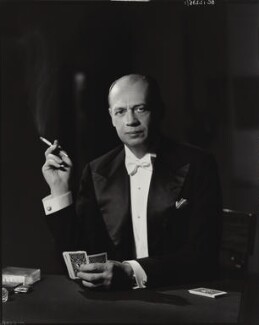
I WON’T BE WATCHING THE OSCARS, but I usually don’t. A long-ago trauma put me off the show, which is really a case of blaming a blameless entity for my own shortcomings. That the incident took place in 1975 only proves how pathetically long I hang onto such things. I was in my first (and final) year of college, an arts school near White Plains, and had been persuaded by a new-found friend named Rick to join him in Manhattan for an Oscars-viewing party during which I'd also be able to show off my bridge-playing prowess, he said.
My parents played bridge. It was a ritual I witnessed from earliest childhood, when they’d click down the legs of the table thus intended and sit with another couple – the cast changed over time – to commence the bidding and playing and smoking and drinking. It seemed to be a very dull game, the most attractive feature of which was the fan of cards each player held, arranged by suit and rank (the cards, not the players, although now that I think of it I can’t be sure).
Although my mother tried to teach me the game, it wasn’t until late in high school that a few of us discovered the shift from poker to bridge, bringing a lot more skill into play. Now it became something filled with high emotion and attendant swearing, which made it much more appealing. And so I sought to pursue this interest in college, and ended up meeting those players in Manhattan.
![]() |
| Ely Culbertson |
Although my mother tried to teach me the game, it wasn’t until late in high school that a few of us discovered the shift from poker to bridge, bringing a lot more skill into play. Now it became something filled with high emotion and attendant swearing, which made it much more appealing. And so I sought to pursue this interest in college, and ended up meeting those players in Manhattan.
Subscribe to:
Posts (Atom)