 |
| 22 Nov. 2013 | Shameless photo by B. A. Nilsson |
Saturday, November 30, 2013


Friday, November 29, 2013
A Winning Battle
From the Vault Dept.: When Kathleen Battle sang a recital program in Troy, NY, in 1986, she was zooming to the top of the profession, performing in opera companies around the world, in televised productions and, soon enough, at the Met. Eight years later, she’d be swiftly fired from that company for what were termed “unprofessional actions.” She hasn’t been on an opera stage since, but has appeared in a variety of musical settings, both classical and popular. Here’s my report on what was a truly thrilling event.
THE WOMAN WHO SWEPT ONTO the stage of the Troy Savings Bank Music Hall two Wednesdays ago wore a stunning red gown that few divas could wear so well, and moved with the self-possession of an opera star. Appropriately, she is an opera star.
A capacity house sat as quietly as I’ve ever heard an audience sit in that reverberant hall and listened worshipfully as Battle took them through an unfamiliar, charming program of songs that sidestepped opera excerpts and instead set a sweetly moody tone.
Pianist Neal Goren shared the credit for a concert with polish and insight that would do credit to a pair of artists twice the age of these (comparative) youngsters.
You many have seen Battle as a sassy Susanna in the televised Marriage of Figaro last season. She is the complete actress as well as singer, and took the stage at Troy in the character of demure recitalist.
And she gave each song a character, achieving a subtle differentiation that isn’t often the stuff of the recital stage.
THE WOMAN WHO SWEPT ONTO the stage of the Troy Savings Bank Music Hall two Wednesdays ago wore a stunning red gown that few divas could wear so well, and moved with the self-possession of an opera star. Appropriately, she is an opera star.
 |
| Kathleen Battle |
Pianist Neal Goren shared the credit for a concert with polish and insight that would do credit to a pair of artists twice the age of these (comparative) youngsters.
You many have seen Battle as a sassy Susanna in the televised Marriage of Figaro last season. She is the complete actress as well as singer, and took the stage at Troy in the character of demure recitalist.
And she gave each song a character, achieving a subtle differentiation that isn’t often the stuff of the recital stage.
Thursday, November 28, 2013
Mains of the Day ...
. . . not to mention starters and sweets. Here's the Jollity Farm carte du jour; the menus for years past looked like these.

Wednesday, November 27, 2013
Community Property
Across the Boards Dept.: Wondering how I spent the Thanksgiving season in years past, I came across a bounty in 1986. Today you can visit a play I (more or less) enjoyed at Capital Rep: the review is followed by a preview piece I wrote the week before. Coming up: Kathleen Battle and Charlie Byrd.
GREASY, MUSTACHIOED PAUL HAS panned Jesse’s first novel, Spiked Heels. He writes for one of those literary magazines and has a following among the intelligentsia, whose numbers include Jesse until the review comes out. Now she’s at Paul’s parents’ home in Queens to confront the critic, but her plans get screwed up by his too-understanding folks, Rose and Danielo, who detect an attraction between the youngsters.
That attraction fuels the four scenes of Dalene Young’s new play Community Property, receiving its world premiere in the second slot of the current Capital Repertory Co. season. It’s an attraction that seems based only upon sex and certainly runs counter to the intellectual preferences of the two.
If you can get around the big improbability that lurks in he setup, be prepared to have a most enjoyable time at this show, a sentimental mixture of comedy and pathos that features some extremely accomplished performances.
GREASY, MUSTACHIOED PAUL HAS panned Jesse’s first novel, Spiked Heels. He writes for one of those literary magazines and has a following among the intelligentsia, whose numbers include Jesse until the review comes out. Now she’s at Paul’s parents’ home in Queens to confront the critic, but her plans get screwed up by his too-understanding folks, Rose and Danielo, who detect an attraction between the youngsters.
 |
| (l-r) Biancamano, Berger, Newhall, and Shepard. |
If you can get around the big improbability that lurks in he setup, be prepared to have a most enjoyable time at this show, a sentimental mixture of comedy and pathos that features some extremely accomplished performances.
Tuesday, November 26, 2013
Just Plain Folk
From the Vault Dept.: A great deal of conducting talent has passed through the Capital Region. Paavo Järvi, Eiji Oue, and Victoria Bond are among those who’ve spent some time here; Geoffrey Simon, who music-directed the Albany Symphony from 1987 to 1991, was born in Australia and now lives in London, where he freelances among that city’s renowned orchestras, and issues recordings on his own Cala label. I missed last Saturday's ASO concert, so here my review of one that Simon conducted in 1988.
MIXING FOLK IDIOMS into classical contexts is one of the ways in which contemporary American composers have attempted to assert a nationalistic identity. It’s never been as effective here as in Europe, where the stylings have had centuries of cross-pollination.
The Albany Symphony Orchestra premiered William Mayer’s “Of Rivers and Trains” Friday night at the Troy Music Hall, a piece commissioned by the Albany Medical College as part of its 150th anniversary celebration. It incorporates the folk song “Erie Canal” for melodic relief from an otherwise relentless ostinato, demonstrating the best and worst of formalizing folk songs.
At the worst you end up with a self-consciously cute work like Roy Harris’s “Folk Song Symphony.” At best is Copland’s “Appalachian Spring” approach, in which the setting never overwhelms the simplicity of the original.
Mayer has written a gutsy orchestral score that requires a large percussion section to reproduce a sense of the tumult in transportation his suite celebrates. Out of an opening chaos rises the “Erie Canal” theme, quoted in fragments at first. It’s a nice choice of material in itself, but sticks out self-consciously in the context of the piece as a whole.
MIXING FOLK IDIOMS into classical contexts is one of the ways in which contemporary American composers have attempted to assert a nationalistic identity. It’s never been as effective here as in Europe, where the stylings have had centuries of cross-pollination.
 |
| Geoffrey Simon |
At the worst you end up with a self-consciously cute work like Roy Harris’s “Folk Song Symphony.” At best is Copland’s “Appalachian Spring” approach, in which the setting never overwhelms the simplicity of the original.
Mayer has written a gutsy orchestral score that requires a large percussion section to reproduce a sense of the tumult in transportation his suite celebrates. Out of an opening chaos rises the “Erie Canal” theme, quoted in fragments at first. It’s a nice choice of material in itself, but sticks out self-consciously in the context of the piece as a whole.
Monday, November 25, 2013
Tale of the Dragon
From the Techno-Vault Dept.: Smartphones translate your words into text messages with alarming agility. It wasn’t always thus. Back when computer dictation programs were introduced, you had to train the software to recognize your voice, and even then there was no guarantee it would get a large percentage of your verbiage correct. So I was a little disingenuous with the “Hey, kids, look how neat!” piece I wrote in 1996. By no means was it produced through dictation – in fact, a couple of years later, I amused myself by formatting some of the program’s misunderstood meanderings into a poem. DragonDictate has improved considerably, needless to say, and is now owned by Nuance Software. By the time piece below went into print, it had been editorially agonized into something with simpler words and shorter sentences and more exclamation points. Here’s the original.
 FOR YEARS, COMPUTERS HAVE BEEN talking to us. With DragonDictate, we can talk to our computers and watch the machines make sense of what we’re saying. Ever fret that the act of typing spoils your creative mood? Sit back, put your feet on the desk, and tell your computer what to write.
That’s what I did to write this column. “Bring up WordPad,” I told it. The appropriate screen blossomed on my monitor. “Begin Document,” I said. The cursor blinked at the top of the page. I spoke into the microphone “For. Years. Comma. Computers. Have. Been.” At this point, the word “bin” appeared on the screen, but a small window popped up alongside with a list of alternate choices. “Been” was number two. “Choose two,” I said, and the word instantly changed into the proper homonym. “Talking. To. Us. Period,” I continued.
You have to separate the words for DragonDictate to make sense of them, but it’s still an exhilarating feeling to see those articulate grunts transformed into editable text. Whenever the program is confused, it shows you a window of ten choices. If the word you meant isn’t listed, begin typing it until it’s displayed, then say, “Choose (whatever number).” You’ll need to do this less and less as the program gets used to your voice.

That’s what I did to write this column. “Bring up WordPad,” I told it. The appropriate screen blossomed on my monitor. “Begin Document,” I said. The cursor blinked at the top of the page. I spoke into the microphone “For. Years. Comma. Computers. Have. Been.” At this point, the word “bin” appeared on the screen, but a small window popped up alongside with a list of alternate choices. “Been” was number two. “Choose two,” I said, and the word instantly changed into the proper homonym. “Talking. To. Us. Period,” I continued.
You have to separate the words for DragonDictate to make sense of them, but it’s still an exhilarating feeling to see those articulate grunts transformed into editable text. Whenever the program is confused, it shows you a window of ten choices. If the word you meant isn’t listed, begin typing it until it’s displayed, then say, “Choose (whatever number).” You’ll need to do this less and less as the program gets used to your voice.
Sunday, November 24, 2013
What's Cooking?
Bird or Beast Dept.: Even as the T-day prep in my house begins to crank into what will become a frenzy by Wednesday, let's consider the alternatives.
WHILE IT’S TRUE THAT my family roasts a turkey on a day other than Thanksgiving, that’s only because we take advantage of holiday-season sales to scoop up a couple of frozen birds for our own freezer, and use it much later for a meal that we view as ironic, parodying the Norman Rockwell image of a turkey dinner by reproducing it perfectly. In July.
 This isn’t the turkey we use at Thanksgiving. That one has to be a costly, hand-raised, antibiotic-free bird, served with a gravy of liberal hypocrisy. Our guests won’t accept a mere Butterball for the holiday (but nobody inquires in July). Frankly, it’s getting expensive.
And it’s intrinsically problematic. You can’t cook it to everyone’s satisfaction. Roasting it requires a fancy timing dance so that the dark meat cooks through without destroying the white meat. My wife’s family’s tradition was to blast the whole bird to a state so dry that it required an ice pick, not a knife. We’ve done the dance of cooking it to breast-meat doneness, then returning the legs only to the oven, but that’s too much work, especially on a day I also dedicate to drinking.
WHILE IT’S TRUE THAT my family roasts a turkey on a day other than Thanksgiving, that’s only because we take advantage of holiday-season sales to scoop up a couple of frozen birds for our own freezer, and use it much later for a meal that we view as ironic, parodying the Norman Rockwell image of a turkey dinner by reproducing it perfectly. In July.
 This isn’t the turkey we use at Thanksgiving. That one has to be a costly, hand-raised, antibiotic-free bird, served with a gravy of liberal hypocrisy. Our guests won’t accept a mere Butterball for the holiday (but nobody inquires in July). Frankly, it’s getting expensive.
And it’s intrinsically problematic. You can’t cook it to everyone’s satisfaction. Roasting it requires a fancy timing dance so that the dark meat cooks through without destroying the white meat. My wife’s family’s tradition was to blast the whole bird to a state so dry that it required an ice pick, not a knife. We’ve done the dance of cooking it to breast-meat doneness, then returning the legs only to the oven, but that’s too much work, especially on a day I also dedicate to drinking.
Saturday, November 23, 2013

Friday, November 22, 2013
The Dark Side’s Dark Side
THE WORLDS OF THOMAS PYNCHON bear very close resemblances to the worlds we know, although once you journey through a Pynchon timescape, you’ll question the authenticity of what’s around you – even if the journey winds through the more remote past of the 18th century of Mason & Dixon, Against the Day’s early 20th century, or Gravity’s Rainbow’s World War II setting.
 Bleeding Edge is set in Manhattan in the months leading to September, 2001, where Upper West Side resident Maxine Tarnow is managing two schoolkids, an ex-husband, and a fraud investigation business that’s no longer licensed – making her services all the more attractive to those who operate in realms where licensing doesn’t matter.
Thus she is hired to take a look at a computer security outfit named, in the style of the time, hashlingrz, run by the villainous Gabriel Ice, who may be involved in global money transfers involving a system called hawala, which I incorrectly thought Pynchon might have invented. Meanwhile, Maxine has mom duties to pursue, including the getting her kids to and from the tony Otto Kugelblitz School, which “occupies three adjoining brownstones between Amsterdam and Columbus” and “is named for an early psychoanalyst who was expelled from Freud’s inner circle.” Which I incorrectly thought was for real.
In fact, one of the challenges of this and any Pynchon novel is to figure out which of its narrative ingredients are actual, although the world he invariably creates picks up enough of a momentum that you just want to hang on for the ride.
Thus she is hired to take a look at a computer security outfit named, in the style of the time, hashlingrz, run by the villainous Gabriel Ice, who may be involved in global money transfers involving a system called hawala, which I incorrectly thought Pynchon might have invented. Meanwhile, Maxine has mom duties to pursue, including the getting her kids to and from the tony Otto Kugelblitz School, which “occupies three adjoining brownstones between Amsterdam and Columbus” and “is named for an early psychoanalyst who was expelled from Freud’s inner circle.” Which I incorrectly thought was for real.
In fact, one of the challenges of this and any Pynchon novel is to figure out which of its narrative ingredients are actual, although the world he invariably creates picks up enough of a momentum that you just want to hang on for the ride.
Thursday, November 21, 2013
All the World’s a Rage
WE KNOW THAT, following the phenomenal success of The Catcher in the Rye, J.D. Salinger didn’t want to be bothered and thus secluded himself in the woods of New Hampshire. Of course he wanted to be bothered, argue David Shields and Shane Salerno in Salinger, their fat, chatty biography. Why else would he have taken such pains to let the world know it wasn’t wanted?
 The 700-page biography was released as a tie-in to the Salerno documentary of the same title, which opened to dismissive, even hostile reviews, and was re-cut last month to tone down its annoying music score and overuse of re-enactments.
But the book can and should be taken as a separate entity, replete with its own balance of flaws and fascinating information. It’s presented in a kind of documentary format, with cascading quotes in place of a movie’s talking heads, but it lends the book a disjointed, slapped-together feel. This also undermines the book’s credibility by giving equal weight to all comers, be they recognized scholars, friends of Salinger, or movie stars who must have stopped by to get quoted.
A reasonably good explanation for Salinger’s personal character and resultant prose is the harrowing wartime experiences the writer underwent, from D-Day through post-war Buchenwald, with Salinger ending up in the worst of the hot spots. If it was Shields’s and Salerno’s intention to bombard the reader in a manner suggesting those experiences, they did pretty well. More than enough information is given to convey the message, and the result threatens to trivialize the subject with its over-intensity.
 The 700-page biography was released as a tie-in to the Salerno documentary of the same title, which opened to dismissive, even hostile reviews, and was re-cut last month to tone down its annoying music score and overuse of re-enactments.
 But the book can and should be taken as a separate entity, replete with its own balance of flaws and fascinating information. It’s presented in a kind of documentary format, with cascading quotes in place of a movie’s talking heads, but it lends the book a disjointed, slapped-together feel. This also undermines the book’s credibility by giving equal weight to all comers, be they recognized scholars, friends of Salinger, or movie stars who must have stopped by to get quoted.
A reasonably good explanation for Salinger’s personal character and resultant prose is the harrowing wartime experiences the writer underwent, from D-Day through post-war Buchenwald, with Salinger ending up in the worst of the hot spots. If it was Shields’s and Salerno’s intention to bombard the reader in a manner suggesting those experiences, they did pretty well. More than enough information is given to convey the message, and the result threatens to trivialize the subject with its over-intensity.
Wednesday, November 20, 2013
You Oughtn’t Go Home Again
HAD SERGEY PROKOFIEV been a nice man, I suspect his diaries wouldn’t be nearly as entertaining as they are. Prodigal Son, the third and final volume, covers the years 1924-1933. The first two similarly fat volumes brought us from the Prokofiev’s years as one of the youngest students at the St Petersburg Conservatory, vying for the attention of schoolmasters and girls, into the fairly quick success he enjoyed as a composer and a pianist, first in St. Petersburg, then in Europe, especially when Diaghilev commissioned the ballet Chout and his opera The Love for Three Oranges caught on (after a disastrous premiere in Chicago).
 By 1924, the 33-year-old Prokofiev is newly married to an exotic-looking singer named Lina Codina and in the sixth year of a self-imposed exile from Russia. Having traveled and performed around the world, he settles in Paris in time to witness the explosion in creative matters that city inspired and hosted.
His path continually crosses that of Stravinsky, with whom the rivalry is friendly but wary, but not without its barbs. Both are vying for Paris’s attention with 1927 premieres – Stravinsky’s Oedipus Rex, Prokofiev’s The Steel Step – but Stravinsky’s work doesn’t grab the public:

His path continually crosses that of Stravinsky, with whom the rivalry is friendly but wary, but not without its barbs. Both are vying for Paris’s attention with 1927 premieres – Stravinsky’s Oedipus Rex, Prokofiev’s The Steel Step – but Stravinsky’s work doesn’t grab the public:
Dukelsky came to dine and asserted that Stravinsky is finished; all that remains is mass hypnosis . . . In the evening a great gathering at Prunières’: Ravel, Falla, Honegger, Koussevitzky, Rubinstein. Koussevitzky and Rubinstein, foaming at the mouth, tore into both Oedipe and Stravinsky’s conducting.
Tuesday, November 19, 2013
Not So Deep as a Welles
MY MOST ARDENT HOPE, as an Orson Welles fan who lived through the last couple of decades of his life, was that he hadn’t truly become the caricature that was about the only public image of him. For every ninety minutes he nabbed with the likes of Dick Cavett, who asked the right questions and was rewarded with entertaining and not-terribly-true anecdotes, there were hours of appearances as the butt of fat-guy gags with the likes of Dean Martin, Merv Griffin, and Frank Sinatra – not to mention the embarrassing hell of him hawking cheap wine and frozen peas.
 It was all in service of his tireless efforts to raise money for the film projects he constantly pursued, we were told, with chief hagiographer Peter Bogdanovich leading the reassurance brigade. Even as mainstream Hollywood continued to shun one of its few acknowledged geniuses, he found friends in younger, outside-the-mainstream filmmakers like Henry Jaglom, whose uneven but worthy output includes some Welles appearances.
It turns out that Jaglom also was persuaded to help Welles construct an autobiography. Welles wanted his opinions and reminiscences to be recorded, but he didn’t want to be reminded that he was being recorded. So Jaglom was instructed to hide a tape machine near the table at Ma Maison, a restaurant in West Hollywood where the two lunched once or twice a week. The lunches had commenced in 1978, but the recordings were begun in 1983. Two years later, Welles died.
My Lunches with Orson, transcribed and edited by film historian (and superb writer) Peter Biskind, is the fruit of this melancholy endeavor. Welles indeed was playing the role of the fat, forgotten genius by this time, and had been playing it for years, but he was fighting the twin demons of despair and depression while managing to cling to some shards of the shattered dreams that had propelled him since the skyrocketing fame he enjoyed in his youth.
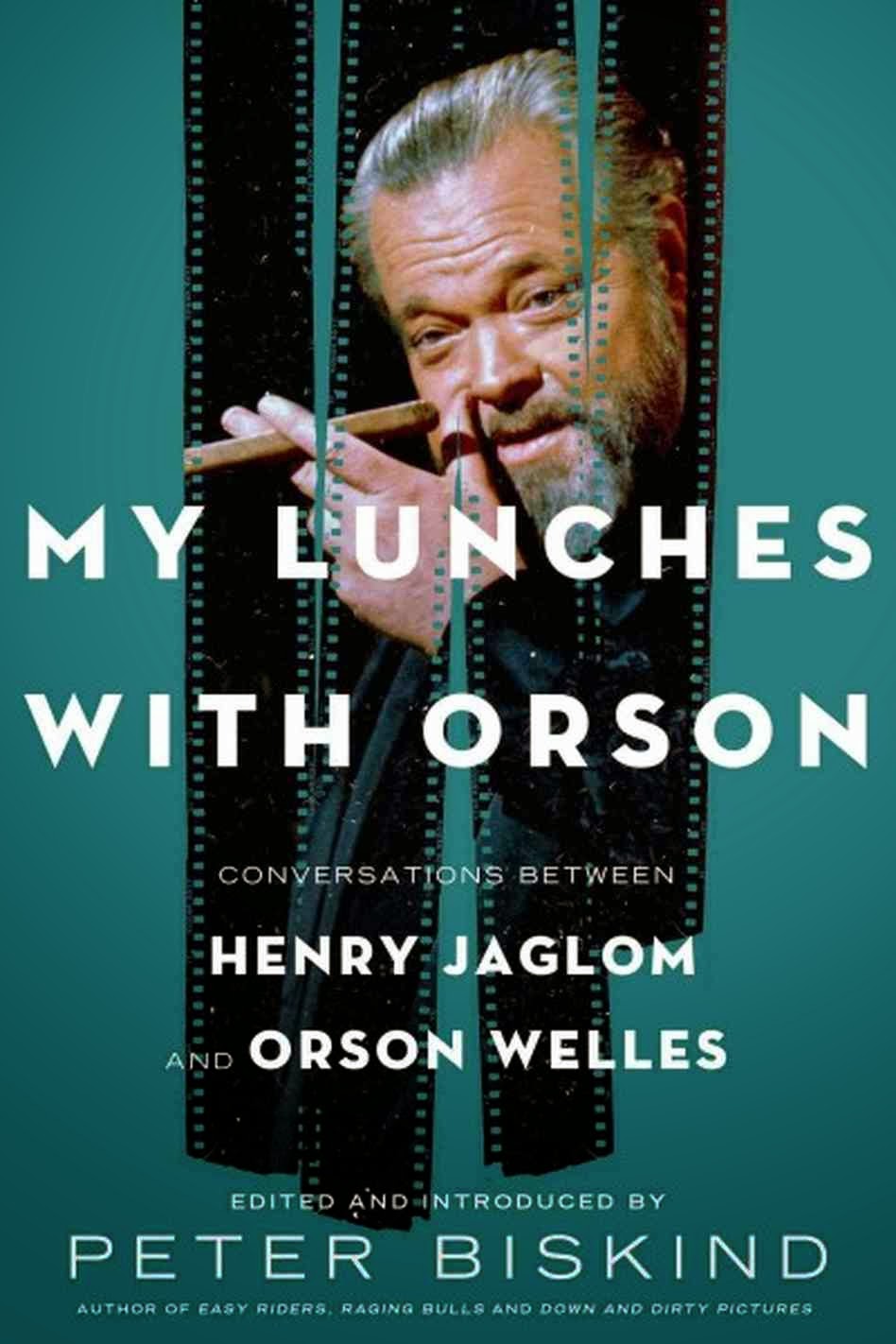
It turns out that Jaglom also was persuaded to help Welles construct an autobiography. Welles wanted his opinions and reminiscences to be recorded, but he didn’t want to be reminded that he was being recorded. So Jaglom was instructed to hide a tape machine near the table at Ma Maison, a restaurant in West Hollywood where the two lunched once or twice a week. The lunches had commenced in 1978, but the recordings were begun in 1983. Two years later, Welles died.
My Lunches with Orson, transcribed and edited by film historian (and superb writer) Peter Biskind, is the fruit of this melancholy endeavor. Welles indeed was playing the role of the fat, forgotten genius by this time, and had been playing it for years, but he was fighting the twin demons of despair and depression while managing to cling to some shards of the shattered dreams that had propelled him since the skyrocketing fame he enjoyed in his youth.
Monday, November 18, 2013
We Aren’t Normal
ABNORMAL OCCURRENCES is being billed as Thomas Berger’s first short-story collection in over thirty years, but that takes into account the small-press run of “Granted Wishes,” which presented three stories from a then-recent issue of Harper’s. All three are included in the new book, along with three new ones in the “Granted Wishes” series. “There are still a few pieces of short fiction that have gone uncollected,” Berger notes, “but they didn't grab me when I reread them, and I decided to write the new stuff.”
 What’s more significant is that this is Berger’s first publication since the 2004 novel Adventures of the Artificial Woman. What’s most significant is that it showcases Berger’s unique voice in a format he rarely practices.
He’s best known as a novelist, although that notoriety is the product of the popularity of the film version of his Little Big Man, the most successful of the quartet of movies his books have inspired. But the fans of his novels, judging by earlier reviews and online comments, are a dedicated bunch, with Jonathan Lethem among the more vocal of his supporters.
This is because the prose in his 23 novels displays a level of craftsmanship that is as masterful as it’s rare, celebrating the power of deft and unexpected combinations of words to tell multi-layered stories with compelling effect. What’s more impressive is that, recognizable as Berger’s style becomes, it’s unique from book to book, each of which is crafted with a particular voice. Thus the dark intricacies of Neighbors has a more contemporary sound than the antique midwest celebrated in Sneaky People; the dystopian future of Regiment of Women has a sense of temporal distance mirrored by the language Berger crafted for long-ago Britain in Arthur Rex.

He’s best known as a novelist, although that notoriety is the product of the popularity of the film version of his Little Big Man, the most successful of the quartet of movies his books have inspired. But the fans of his novels, judging by earlier reviews and online comments, are a dedicated bunch, with Jonathan Lethem among the more vocal of his supporters.
This is because the prose in his 23 novels displays a level of craftsmanship that is as masterful as it’s rare, celebrating the power of deft and unexpected combinations of words to tell multi-layered stories with compelling effect. What’s more impressive is that, recognizable as Berger’s style becomes, it’s unique from book to book, each of which is crafted with a particular voice. Thus the dark intricacies of Neighbors has a more contemporary sound than the antique midwest celebrated in Sneaky People; the dystopian future of Regiment of Women has a sense of temporal distance mirrored by the language Berger crafted for long-ago Britain in Arthur Rex.
Sunday, November 17, 2013
Vermont Flavored
HOW DO YOU bring out the excitement that’s written into a piece of music without imposing artificial emotion? Musicians from Marlboro gave an exemplary lesson with their Nov. 15 concert at Union College. Each annual visit presents a different ensemble with a unique array of chamber works; this year the music of Thomas Adès nestled with works by Beethoven, Mendelssohn, and Fauré.
 So much study is given to a piece of music during the Marlboro summer sessions – which includes work with seasoned professionals – that the young musicians gain an intense familiarity with what they’re performing, not to mention an approach to understanding works they take on outside of the Marlboro world.
Thus it was that the Beethoven trio that opened the program – his lighthearted “Kakadu” Variations, Op. 121a – was performed with the sense of humor the work demands. It’s reckoned to be a synthesis of work from the composer’s early years that was revised late in his life for publication. It opens with a introduction of such heightened solemnity that the transition to the “Kakadu” theme – a popular song borrowed from a contemporaneous opera – is all the more hilarious. But it needs no added interpretive artifice, for the humor is built into the piece.

Thus it was that the Beethoven trio that opened the program – his lighthearted “Kakadu” Variations, Op. 121a – was performed with the sense of humor the work demands. It’s reckoned to be a synthesis of work from the composer’s early years that was revised late in his life for publication. It opens with a introduction of such heightened solemnity that the transition to the “Kakadu” theme – a popular song borrowed from a contemporaneous opera – is all the more hilarious. But it needs no added interpretive artifice, for the humor is built into the piece.
Saturday, November 16, 2013
Expressly Espresso
Sharing the Urnings Dept.: Six years ago, fresh from a trip to Italy, I decided to get a handle on the art of espresso. Turned out the days of yanking that brew handle are over. The Saeco machine is still available, although it's been superseded; KitchenAid seems to have gotten out of the espresso machine business, but you can see a listing here.
SHE DIPPED HER FOREFINGER into the rich beige foam and, raising the finger as if to say “shush,” isolated a heavy droplet on the tip. We watched as the little bubble quickly dissipated and a dark brown rivulet ran down toward her palm. “That’s the crema,” she explained. “And it’s not very good.”
Anita Johnson is a coffee fanatic, which is good: she works for Minneapolis-based Caribou Coffee, whose gourmet product recently began entering the local market. But this was no run-of-the-mill venue whose espresso we were tasting. We sat in the dining room of a high-end restaurant outside Florence, Italy, so our expectations were similarly high. “They’re using an automatic machine,” said Anita, “so they don’t have a lot of control over the pull. But there are adjustments they can make to fix the problem.”
I don’t want to suggest that I drank bad espresso in Italy; Anita’s criticisms came from a rarefied palate, the gustatory equivalent of finding fault with a New York Philharmonic performance. In fact, nearly a decade ago the Italian government created a regulatory commission, the Istituto Nazionale Espresso Italiano, which certifies restaurants and coffee bars provided the establishments demonstrate the use of a certified coffee blend, certified brewing machine and grinder and licensed personnel.
SHE DIPPED HER FOREFINGER into the rich beige foam and, raising the finger as if to say “shush,” isolated a heavy droplet on the tip. We watched as the little bubble quickly dissipated and a dark brown rivulet ran down toward her palm. “That’s the crema,” she explained. “And it’s not very good.”
 |
| Photo by B. A. Nilsson |
I don’t want to suggest that I drank bad espresso in Italy; Anita’s criticisms came from a rarefied palate, the gustatory equivalent of finding fault with a New York Philharmonic performance. In fact, nearly a decade ago the Italian government created a regulatory commission, the Istituto Nazionale Espresso Italiano, which certifies restaurants and coffee bars provided the establishments demonstrate the use of a certified coffee blend, certified brewing machine and grinder and licensed personnel.
Friday, November 15, 2013
Miss Utica
Ripped from the Pages Dept.: What’s my current restaurant review? Glad you asked!
THERE ARE THOSE who welcomed the rescue of the Miss Albany Diner. There are those who insist they’ll now never set foot in the place. It’s a classic conundrum for the sentimentalist. Would it help to know that, back in the heyday of the classic diner, there were at least 10 Miss Albanys throughout the city? And that the diner at this location wasn’t even one of them?
But there’s a connection. Besides the obvious one, that is, which is that the place most recently named Miss Albany gained that moniker only when the film of Ironweed came to town in 1986. Talk to Deborah Cote, who may be making your pizza at Sciortino’s, and you’ll learn that her father, Harold, managed the Miss Albany No. 3 in the late 1950s, a (long-gone) silver diner at 48 Central Ave. So there’s still a living Miss Albany link.
Matt Baumgartner didn’t know this when he hired Cote last year to work in the latest of his string of eateries. He knew her from Jack’s Pizza, across from Albany’s arena, where she was turning out some of the best pies in town. Having explored southwestern and German fare with Bombers and Wolff’s Biergarten, Baumgartner turned to his maternal grandparents, for whom Sciortino’s is named, and from whom many of the recipes have descended. The restaurant also salutes Utica, where Baumgartner grew up, which is why you find three varieties of riggies on the menu.
THERE ARE THOSE who welcomed the rescue of the Miss Albany Diner. There are those who insist they’ll now never set foot in the place. It’s a classic conundrum for the sentimentalist. Would it help to know that, back in the heyday of the classic diner, there were at least 10 Miss Albanys throughout the city? And that the diner at this location wasn’t even one of them?
 |
| Photo by B. A. Nilsson |
Matt Baumgartner didn’t know this when he hired Cote last year to work in the latest of his string of eateries. He knew her from Jack’s Pizza, across from Albany’s arena, where she was turning out some of the best pies in town. Having explored southwestern and German fare with Bombers and Wolff’s Biergarten, Baumgartner turned to his maternal grandparents, for whom Sciortino’s is named, and from whom many of the recipes have descended. The restaurant also salutes Utica, where Baumgartner grew up, which is why you find three varieties of riggies on the menu.
Thursday, November 14, 2013
Pražák at Union
From the Vault Dept.: What the hell was I thinking with this lede? Even in 1986, when I was relatively fresh to the world of cranking out reviews, I could convince myself that dwelling on the appearance of the performers made some kind of sense. And what characterized this quartet’s identity so profoundly? Clearly, I was too busy lauding their wardrobe to say.
CENTRAL CASTING SHOULD HAVE the Pražák String Quartet available for Hollywood. The four musicians are accomplished players, who blend marvelously and who look the part.
 A concert at Union College’s Memorial Chapel Wednesday night proved that the group is good enough even to be a little eccentric, in the best sense of the word.
The quartet was founded in 1972 by students at the Prague Music Conservatory. The program – music of Mozart, Janáček, and Smetana – offered the ensemble the chance to present Czech pieces with a native accent. The interpretations took some unexpected turns but never without a felicitous result.
Should the identity of a piece of music compete with the identity of an artist? That question presupposes that a “pure” interpretation can exist, which is debatable. The Pražák Quartet has an identity as a performing group that informed everything they played and it worked. Like a fine singer, they have an identifiable voice.
CENTRAL CASTING SHOULD HAVE the Pražák String Quartet available for Hollywood. The four musicians are accomplished players, who blend marvelously and who look the part.

The quartet was founded in 1972 by students at the Prague Music Conservatory. The program – music of Mozart, Janáček, and Smetana – offered the ensemble the chance to present Czech pieces with a native accent. The interpretations took some unexpected turns but never without a felicitous result.
Should the identity of a piece of music compete with the identity of an artist? That question presupposes that a “pure” interpretation can exist, which is debatable. The Pražák Quartet has an identity as a performing group that informed everything they played and it worked. Like a fine singer, they have an identifiable voice.
Wednesday, November 13, 2013
The Pessimist
Guest Blogger Dept.: More of the early verse of P. G. Wodehouse.
THEY tell me that the weather’s fair,
The day serene and balmy;
No more for rain need I prepare –
No chilly blast shall harm me.
They prate of ‘warmth,’ of
‘gentle glows,’
They rave of how sublime it is;
I shake my head, as one who knows
Just what the British climate is.
They say the trees are
growing green,
That flowers are in bloom,
That bees and butterflies are seen;
They bid me quit my room.
My hat and boots to me they bear.
They tell me what crime it is
To stay indoors; but I’m aware
Just what the British climate is.
 |
| P. G. Wodehouse |
The day serene and balmy;
No more for rain need I prepare –
No chilly blast shall harm me.
They prate of ‘warmth,’ of
‘gentle glows,’
They rave of how sublime it is;
I shake my head, as one who knows
Just what the British climate is.
They say the trees are
growing green,
That flowers are in bloom,
That bees and butterflies are seen;
They bid me quit my room.
My hat and boots to me they bear.
They tell me what crime it is
To stay indoors; but I’m aware
Just what the British climate is.
Tuesday, November 12, 2013
PD-ABCs
 MY PAPER-BASED ORGANIZER measures 10.5" by 8" by 1.5" and weighs about two and half pounds. To note an entry I unzip its cover, flip to the correct page, find a pen, and write. Provided I’m not in a bouncy vehicle. The ten-ounce Psion 3a is 6.5" by 3.25" by .75" – measured in cubic inches, the Psion has one-eighth of the bulk of the organizer. To note an entry I flip it open, press a button to activate the computer, and type – bouncy vehicle notwithstanding.
Unlike the organizer, the Psion lets me search for previously-entered info without flipping pages. When I copy a new address and phone number into the organizer, I have to transcribe it by hand into the computer. The Psion lets me export that info. Those are very tiny keys, so it’s an extra effort for a fat-fingered typist like me to get the data in there – which makes it all the more satisfying that I don’t have to type it twice.
Those small keys aren’t as bad as they seem at first. You really do get used to them, and I’ve mastered thigh-top balancing of the Psion while doing my full-bore, four-fingered typing, as well as a technique in which I hold the unit in both hands and do data entry with, you guessed it, my thumbs.
Monday, November 11, 2013
Bottling a Dream
From the Canning Jars Dept.: As we finish up putting up that which we grew and recombobulated, how about that dream of bringing your product to market? Here’s my survey from a few years ago of some folks who did just that.
BRINGING A CULINARY CREATION to market is the dream of anyone who’s ever been praised for a particular preparation. But what motivates someone to take the risky and costly steps to bring such a product to market?
“I have three children,” says Delmar resident Caroline Barrett. “After my youngest was born, I decided I wanted to be able to stay home and spend more time with them.” She left a career as a graphic designer to begin what started as a home-based business inspired by her love of food.
“I looked at what I like to make, and what makes people happy. My spicy maple almonds have always been popular with my friends, so I put some packages of them together and took them to the small farmers’ market that used to be at Indian Ladder Farms. They sold well, so next I went to Delmar Marketplace – I walked in there with my three kids and sold them my product.”
BRINGING A CULINARY CREATION to market is the dream of anyone who’s ever been praised for a particular preparation. But what motivates someone to take the risky and costly steps to bring such a product to market?
 |
| Tim Lane at the (now shuttered) Glen Country Store. Photo by B. A. Nilsson |
“I looked at what I like to make, and what makes people happy. My spicy maple almonds have always been popular with my friends, so I put some packages of them together and took them to the small farmers’ market that used to be at Indian Ladder Farms. They sold well, so next I went to Delmar Marketplace – I walked in there with my three kids and sold them my product.”
Subscribe to:
Posts (Atom)