Search This Blog

Monday, December 31, 2012

Bested

From Deep within the Icebox Dept.: It’s Best-of-the-Year time, and Thursday’s Metroland will sport its share of lists, including my favorite ten restaurants from the past twelvemonth. For a fascinating contrast, here’s what I wrote twenty years ago. Of the places mentioned below, the only ones still open and offering anything like the same fare are CafĂ© Capriccio, Lombardo’s, Lo Porto, the Desmond, and the Mirror Lake Inn.


MY FAVORITE RESTAURANT isn't your favorite. Which it shouldn’t be. Part of the magic of the restaurant business is its diversity, which makes it similar to music. As with music, the more you study and participate, the more diverse your tastes become.

Cafe Capriccio | Albany, NY
This end-of-the-year, burn the nostalgia down imperative appeals to columnists as a vehicle to show off their arcane knowledge. Bryan Miller in the New York Times just came up with an eye-damaging list that correlates foods with favorite places, an exhaustive (and exhausting) Best Of intended to throw us into awe at the redoubtable Mr. Miller’s travels and note-taking ability.

Entertainment Weekly
digested the year for us in top-ten structured paragraph bites, again to inspire awe at their columnists’ ability to regard their entertainment experiences in hierarchical terms.

Pleasant dining is not about such ranking. Even the detachment necessary to regard a restaurant as a review subject damages the dining experience. Dining occurs completely in the present, which is one of its less-regarded gratifications. It’s a social event fraught with ritual. It’s nourishing (or it’s supposed to be). It heightens an occasion: dine with someone you love and it’s a wonderland of bliss. Get stuck at a table with a loathsome individual and your food will taste vile.

Sunday, December 30, 2012

Saturday, December 29, 2012

Friday, December 28, 2012

Thursday, December 27, 2012

Wednesday, December 26, 2012

Monday, December 24, 2012

Christmas Eve

IT'S THE NIGHT before Christmas, 1908. The man you've loved for so many years has come back to town, but you've been unable to discover if he returns your affection. Now, as twilight falls over the village, a group of carolers goes back, celebrating the holiday. You respond in a far different mood.

From Beasley's Christmas Party, with music by Tom Savoy and book and lyrics by Byron Nilsson, based on the novella by Booth Tarkington.


Music and lyrics copyright © 2007 by Byron Nilsson and Tom Savoy.

Sunday, December 23, 2012

A Christmas Saga

From the Vault Dept.: One more old mined-from-Metroland Christmas piece, another in what had been the continuing saga of Uncle Ned, this one from 1986.


A SPIRIT-OF-CHRISTMAS MORAL lies buried somewhere within this saga, but for the most part it’s an accurate reminiscence of the holiday antics of a couple of guys in the town where I grew up. What made the experience so poignant was that I was related to one of them.

The town itself is a New England charmer, one of those 18th-century riverside, light-industry towns that has since been taken over by commuters. New York City commuters, I should add, who move to the country and then try to make it look like the city they fled.

Twenty years ago we were getting just the edge of the wedge as this Manhattan attorney or that successful actor bought houses without much hullabaloo.

Then there was a man named Packer who gave up work in PR or advertising or some such occupation to buy a country store, a little Gristede’s a couple of blocks from my parents’ house. He believed that personalized service would offset the need to ask prices higher than posted at the A&P down the street.

The store opened one Christmas Day with a party and Packer’s pledge that this store was here to serve the people and hereafter would be open 365 days a year late into every night. With a special on fresh-killed turkeys for New Year’s. The mistake he made was in selling one of those birds to an uncle of mine.

Saturday, December 22, 2012

Friday, December 21, 2012

Nights Errant

From the Bookshelf Dept.: Before (ostensibly) packing it in with his final collection of essays, Final Fridays, John Barth was our most accessible experimentalist, deconstructing the processes of storytelling using every device the world of literature has to offer, including the use of a Möbius strip to tell a never-ending tale. The Last Voyage of Somebody the Sailor revisited one of his favorite storytellers, Scheherazade. Here’s my 1991 review.


IN JOHN BARTH’S LITERARY WORLD, the key to the story is the story. Techniques of storytelling become more than tools or devices, achieving characteristic momentum as funny or engrossing or suspenseful as any plot element.

For example. Barth’s tenth and latest novel, The Last Voyage of Somebody the Sailor, turns the Arabian Nights inside-out by giving us a framing-tale set in Sindbad’s court in which a time-transplanted sailor appropriately named Behler or Baylor tells tales of his life as a 20th-century American journalist and the events that led to the ill-fated voyage that transplanted him to ancient Baghdad.

This is a work that’s symphonic in form, the literary equivalent of Rimsky-Korsakoff’s Scheherazade with a little Pictures at an Exhibition thrown in.

Not many un-overused plots are said to remain, but if you think you’ve heard them all you’ll be pleased with the way this novel avoids dependence on any single strain of storyline. Behler, the storytelling narrator, believes he has a spiritual twin in Scheherazade. He has a literal twin in a sister who died at birth, whom he keeps alive in an imaginary companion he calls “Bijou.” Bijou and Scheherazade both are addressed in the story Behler tells, or imagines an aged Scheherazade might be telling a visitor who resembles Barth/Behler but who unmistakably is the “Destroyer of Delights and the Severer of Societies.”

Water is a great companion to voyaging; the seas we’re presented range from great expanses of ocean to the marshes of Maryland as well as moist tracts of love and misunderstanding. Behler is a terrific ladies’ man, whose romances begin with a rambunctious, well-drawn childhood sweetheart called Crazy Daisy Moore. She turns out to have an uncomfortable lot in common with Yasmin, daughter of Sindbad, whose erotic interludes with the narrator are skillfully written – Barth’s (and Behler’s) best.

Thursday, December 20, 2012

Cabaret is a Life, Part Two

From the Vault Dept.: She made her stage debut at 15 in a Nazi interment camp, in “As You Like It,” and went on to learn folk songs – including traditional Yiddish tunes – while living in London after World War II. Martha Schlamme was born in Vienna, fled to France, further fled to England, and ended up in the U.S., where she gained increasing success as a Broadway and cabaret performer. She also specialized in the songs of Kurt Weill, several of which she presented at a 1985 performance at Proctor’s Theatre in Schenectady, for which the theater stage was transformed into a nightclub. This proved to be her final tour; six months later she suffered a stroke while onstage, and died two months after that. Here’s a piece I wrote in advance of her Proctor’s appearance, followed by my review of the show.


SHE’S CURRENTLY ON a New York City stage with her “Kurt Weill Cabaret,” but it will be closed for the night while Martha Schlamme comes to Proctor’s Theater for one performance at 8 p.m. Saturday.

“I will do the show on Friday, then drive up with my manager the next day. Unfortunately, I can’t stay long – I have to be back in New York for a Sunday matinee,” she said in a phone  conversation.

Since her arrival in the United States in 1950 – following a perilous childhood traveling throughout war-torn Europe – Ms. Schlamme has worked as a singer and an actress and, more recently, as a teacher. But it is in her cabaret-concert that she offers her most personal view of life.

“I have divided the concert into two halves. The first one has songs which deal with the possibility and impossibility of relationships between men and women. It’s personal, without it being about me. The emotions come from personal experience, but the songs were written by other people. I use poetry and song to string the thoughts together. I sing one of Stephen Sondheim’s songs, and a song by Richard Maltby and David Shire and a quite a bit of Jacques Brel. The poetry is by Judith Viorst, Edna St Vincent Millay and Dorothy Parker. It’s a fun program, but it has depth, too, coming as it does from real human experience.

Wednesday, December 19, 2012

Ham on Windows

From the Tech Vault Dept.: The first sentence of the piece below shows how dated it is, as long-distance calling has never been cheaper. The second sentence was written before the advent of wireless networking. Hey, it’s 1995! Which means you should enjoy this as a curiosity. All of the products have since been superseded. And this version of the article contains dialgue that was cut for the published version.


REACHING OUT TO TOUCH SOMEONE over land lines is fine if you’ve got deep pockets, but the only guarantee about keeping in touch by phone is that it’s never going to get cheaper. Wireless transmissions, on the other hand, are free.

As a user of online services and BBS networks, you’ve already seen how easy it is to be part of an electronic network of friends who may never meet face-to-face. Long before the first BBS fired up, however, an electronic network of amateur radio operators circled the globe. They keep in touch by voice and by Morse code; they chat with old friends on home frequencies and search for new ham operators all around the dial, exchanging postcards (QSL cards) to recognize those contacts. They make the news whenever a disaster strikes, when ham radio may be the only way to get information in and out of a crisis scene.

Like computerists, they work from systems that are a combination of store-bought and home-brewed, and so easing into the world of personal computers has been a natural for hams. Not surprisingly, the two worlds come together with the newer breed of ham radios, equipped with interfaces that allow you to run a rig from a computer keyboard.

Tuesday, December 18, 2012

Whistling a Merry Tune?

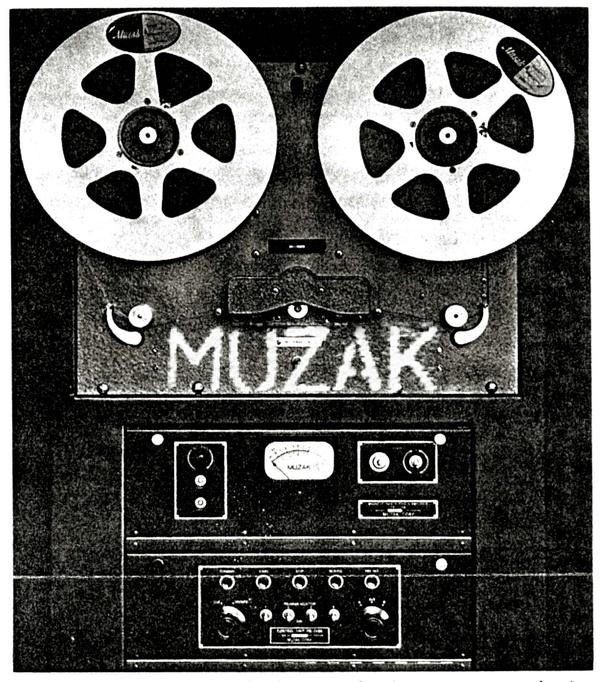
From the Radio Archives Dept.: I’ve been fascinated with Muzak ever since writing a college-era paper on the company, a research job that included a visit to its headquarters in 1974. I made no appointment beforehand, and arrived at lunchtime, when most of the offices were empty. But I found a very pleasant custodian who showed me around the facility and gave me some pamphlets about the company. “The have orchestras come in and record the music here,” he told me. “Sometimes I get surprised when I hear a new song done the old-fashioned way they like. I don’t think they’ll ever do any of those really new music styles.” “Like Reggae?” I suggested. “No,” he said. “Like – what do they call it? Rock and Roll.”


CHRISTMAS ARRIVED EVEN BEFORE Thanksgiving this year, and you know it’s on its way because it’s announced by the Muzak first. There you are in the supermarket trying to decide between a frozen pumpkin pie or a can of filling and another crack at preparing that crust when the tinny strains of “Deck the Halls” tickle your subconscious.

You look up in surprise. Christmas? Where’d that come from? Then you realize the tune is coming over the store’s speakers. Sure, they follow it with a quick “Gentle on My Mind” or something, but the stage is set. And you know that, once the Thanksgiving plates have been cleared and you’ve taken that deep I’m-going-to-get-the-shopping-done-early-this-time-for-real breath, you are going to be bombarded with that crap for the next five weeks.

Christmas Muzak is more insidious than you may think. Let’s first take a look at Muzak itself. It began in the early part of this century when someone had the notion of combining two new technologies: the phonograph and the automobile. He drove around broadcasting popular songs. An attempt to make any kind of industry out of it didn’t go anywhere until World War II, when it was discovered that the right songs, broadcast into the factories, increased worker productivity.

Muzak was, from the start, meant as a manipulative device, and today it’s a business that relies on a panel of psychologists who coordinate the song choices, the instrumentation, the tempos and so on, all specially designed to help sell products or keep the workers alert.

Monday, December 17, 2012

Santa for Sale

From the Chimneyside Dept.: Despite repeated encouragement from sadistic friends, I have never been tempted to play Santa. The Santas hired by Macy’s for December purportedly take home about 30 grand for the month, but I find this not at all tempting. The brutal parade of children conducted to the tune of so-called holiday classics would undo me within a day. Besides, my own beard looks wimpy next to a luxuriant set of yak whiskers. I don’t see a yak-hair beard set listed on the Costumer’s website, but a search elsewhere puts it at $400 to $600 today. So adjust the other prices noted below accordingly.


“THE OLD, TRADITIONAL SANTAS always wear a beard and wig of yak hair,” says Anne Bauer. “We don’t get many requests for it now, but there are always one or two a year.” Bauer is a consultant at The Costumer in Schenectady, where Santas have been obtaining their garb for nearly 70 years. And that beard-and-wig set is listed at the top of the Costumer’s catalogue for a few bucks shy of $200.

It’s a dedicated Santa who would drop so many bucks for a just-right beard; add to that the best of the Santa suits, deluxe Santa eyebrows and a pair of real leather boot tops and you’ve topped $1,000.

What do you get for that kind of money?

For a little under $40 you can get the same outfit at the same place. Bauer explained the differences:

“First of all, our best Santa suit is the best there is. It’s a wool suit with a high-quality satin lining. The $640 model is trimmed with real rabbit fur; you can get it trimmed with imitation rabbit for $180 less. This is the Cadillac of Santa outfits.”

It certainly offers a luxury ride. The fur trim surrounds the coat and provides a plush shawl collar, and a 6-inch band of fur complements the tasseled cap.

The color is a deep, handsome crimson. Color is a vital characteristic of a Santa suit; the better the red, the more you pay.

Sunday, December 16, 2012

Designer Ear-Hangers

From the Vault Dept.: Why, I hear you never cry, don't I draw cartoons for a living? This is the reason. Inspired by a Soho gallery show of lobe enhancers, I sketched this proposal for more useful appointments. Back in Metroland's free-wheeling, pre-alternative weekly days, they would run such things. This is one of my very few drawings that has appeared in print.

Mid 1980s | Drawing by B. A. Nilsson

Friday, December 14, 2012

A Long Winter’s Nap

From the Vault Dept.: Twenty-five years ago, I was able to sneak a short story into Metroland from time to time, typically as holiday filler. Here’s one such item.


I’M NO SCROOGE. You'll never hear a “humbug” cross my lips as the old year wallows its way through the holidays. But the year I celebrated Christmas two days in a row robbed the occasion of much of its sentimental pleasure.

Illustration by Brian Pearce
It started when Uncle Ned drank too much during Thanksgiving dinner and entertained my brother and me with a litany of flatulence impressions: that is, he portrayed town notables with his notion of how each discharges pent-up wind. The sheriff gave a shoe-quivering blast; bank president Neff erupted with high-potency soundlessness. Our parents interceded by banishing Ned from the house. I slipped him a pumpkin pie in conciliation.

The big news after the meal, besides the missing pie, was word of the return of my oldest brother from overseas. Gary was in the army and had gotten that rarest of treats, a Christmas furlough.

My father, not the world’s greatest cook, planned a holiday extravaganza centered around a baked ham. My mother went on more of a shopping frenzy than usual, buying clothes for Gary despite my little brother Tim’s observation that the military currently was satisfying his sartorial needs.

Thursday, December 13, 2012

A Gallic Christmas

From the Vault Dept.: The Boston Camerata makes its 23rd appearance at Union College’s Memorial Chapel at 8 PM tomorrow (Friday, Dec. 14) with a program titled “The Brotherhood of the Stars: Medieval Music from the Old and New Worlds.” Here’s my review of their 1988 appearance.


A SLAVISH BOW TO TRADITION would have required the Boston Camerata to enter with a donkey for the anonymous “Orientis Partibus” that brought the ensemble down the aisle of the Union College Memorial Chapel Sunday afternoon. The 13th-century French song describes the movement of an ass and, as Camerata director Joel Cohen explained, such a beast was used when this was performed “during that strange week between Christmas and New Year's when everything goes topsy turvy.”

Boston Camerata
But the group's French Christmas program had charm enough without it. A large audience braved the yucky driving conditions to fill the chapel for what has to be the highlight of anybody's Christmas: a program of authentically-played ancient songs with none of the hype or drear of the usual stuff.

The performers are all expert at what they do, and Cohen ties the whole thing together with a brilliant sense of programming and pacing. From the opening set of three a cappella songs describing “Midnight in Bethlehem” through a second-half “Renaissance bouquet of carols and dances,” a magical mood was struck and maintained.

Lutenist Cohen leads a flock of singers and instrumentalists who often are found in one another's territory: tenor John Fleagle is likely to pick up a hurdy-gurdy; counter-tenor Michael Collver plays drum and pipe. And Cohen will like as not sing and play percussion when he's not coaxing gorgeous music from his lute. (He took only one lute solo: Adrien le Roy's “Bransle de Bourgogne,” but it was masterful.)

Wednesday, December 12, 2012

The Tortures of Week-end Visiting

Guest Blogger: Robert Benchley.


THE PRESENT LABOR SITUATION shows to what a pretty pass things may come because of a lack of understanding between the parties involved. I bring in the present labor situation just to give a touch of timeliness to this thing. Had I been writing for the Christmas number, I should have begun as follows: “The indiscriminate giving of Christmas presents shows to what a pretty pass things may come because of a lack of understanding between the parties involved.”

Illustration by Gluyas Williams
The idea to be driven home is that things may come to a pretty pass by the parties involved in an affair of any kind if they do not come to an understanding before commencing operations.

I hope I have made my point clear. Especially is this true, (watch out carefully now, as the whole nub of the article will be coming along in just a minute), especially is this true in the relations between host and guest on week-end visits. (There, you have it! In fact, the title to this whole thing might very well be, “The Need for a Clearer Definition of Relations between Host and Guest on Week-end Visits,” and not be at all overstating it, at that.)